
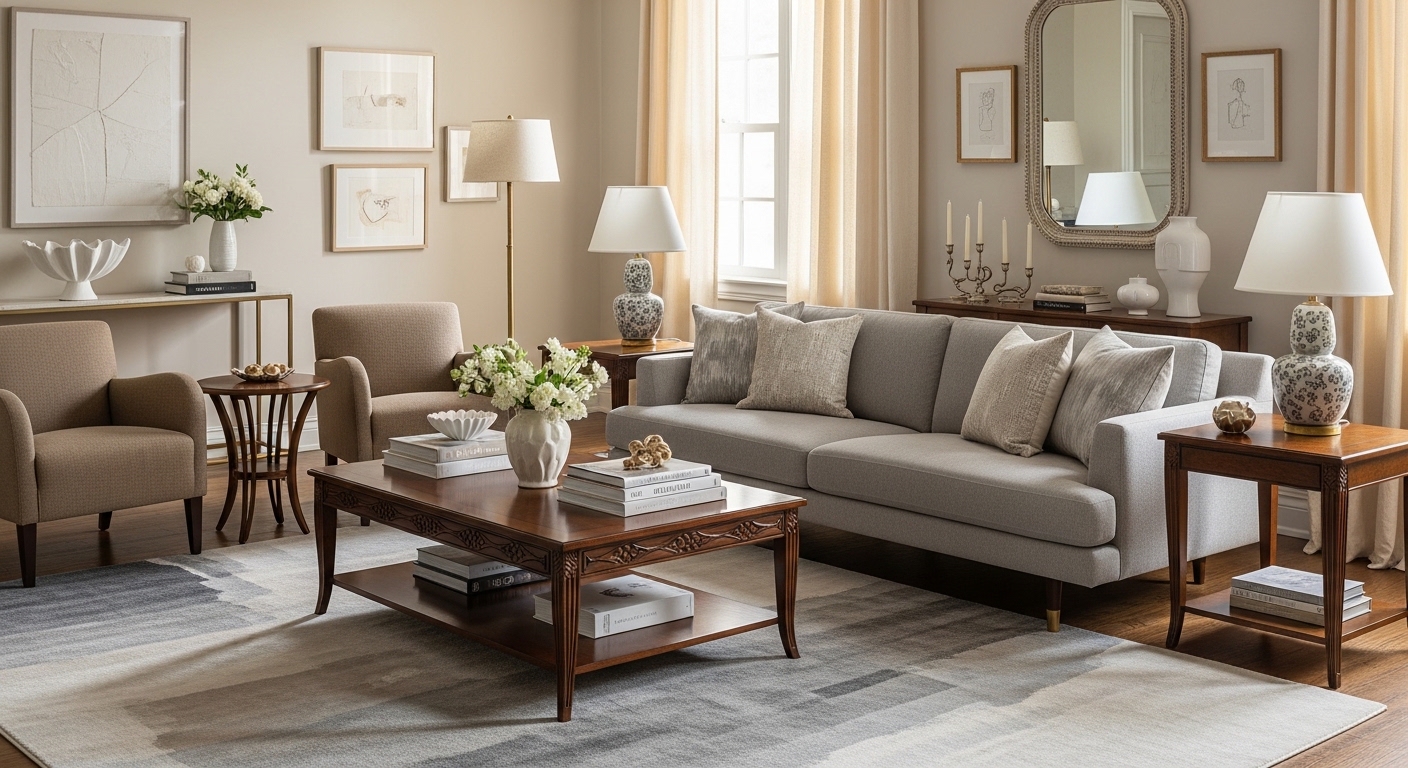
Ever feel stuck choosing between modern and traditional decor?
You’re not alone.
Some people love the clean simplicity of modern design. Others prefer the warmth and detail of traditional interiors. But what if you didn’t have to choose?
That’s exactly where the transitional decorating style shines.
It blends the best of both worlds—creating a space that feels timeless, elegant, and comfortable without being too trendy or too old-fashioned.
Let’s break down how it works—and how you can use it in your own home.
Table of Contents
What Is Transitional Decorating Style?
Transitional decorating style is a design approach that combines traditional and modern elements into one cohesive look.
Think of it as balance:
- Not too minimal
- Not too ornate
- Clean, but still cozy
Key characteristics:
- Neutral color palettes
- Simple yet elegant furniture
- Minimal clutter
- A mix of textures
Example:
A classic sofa paired with a sleek coffee table and modern lighting—that’s transitional style in action.
Why Transitional Style Is So Popular
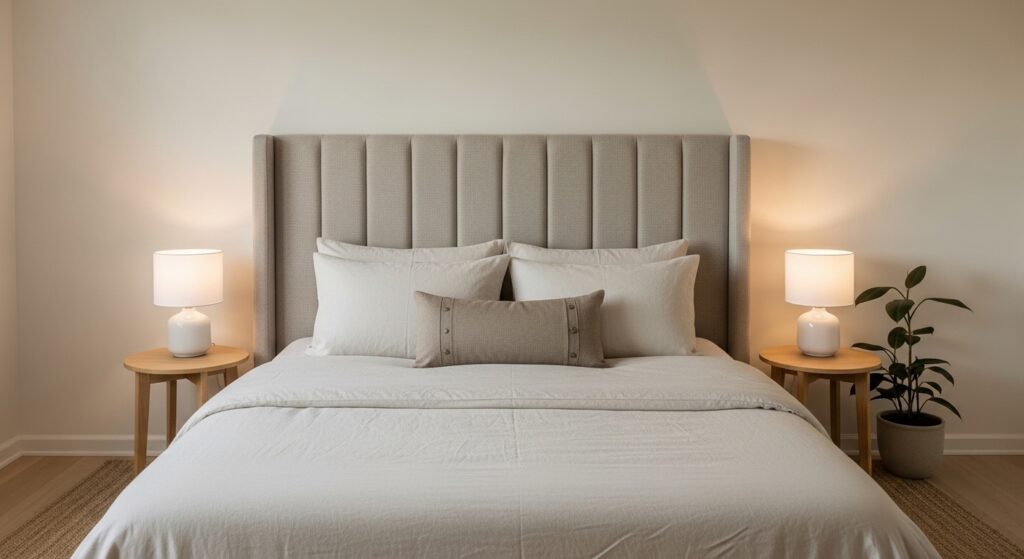
This style has become one of the most popular interior design trends—and for good reason.
1. Timeless Appeal
Unlike trendy styles, transitional design doesn’t go out of fashion quickly.
2. Easy to Adapt
You can slowly update your home without replacing everything.
3. Comfortable Yet Stylish
It feels lived-in but still polished.
4. Works in Any Space
From small apartments to large homes, it fits everywhere.
Insight:
Many homeowners today prefer flexible, long-lasting designs—and transitional style delivers exactly that.
Key Elements of Transitional Decorating Style
To achieve this look, focus on a few core elements.
1. Neutral Color Palette
Colors like white, beige, gray, and soft earth tones dominate.
Add contrast with black accents or darker wood tones.
2. Balanced Furniture
Mix traditional shapes with modern simplicity.
- Traditional: tufted sofas, wooden tables
- Modern: clean lines, minimal detailing
3. Texture Over Patterns
Instead of bold prints, use textures:
- Linen
- Wool
- Leather
- Wood
This keeps the space interesting without overwhelming it.
4. Simple Yet Elegant Decor
Avoid clutter.
Choose a few statement pieces:
- Artwork
- Vases
- Lamps
5. Soft Lighting
Lighting plays a big role.
Use:
- Warm lights
- Minimalist fixtures
- Layered lighting (table lamps + ceiling lights)
How to Create a Transitional Living Room
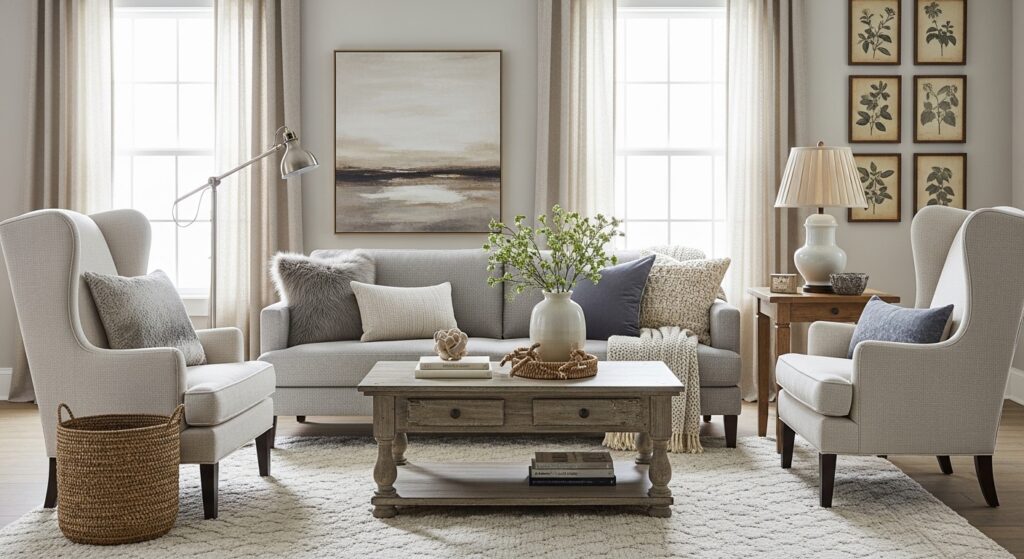
The living room is the easiest place to start.
Step-by-step idea:
Step 1: Choose a Neutral Base
Start with a neutral sofa and walls.
Step 2: Add Mixed Furniture
Pair a classic sofa with a modern coffee table.
Step 3: Layer Textures
Use rugs, cushions, and throws.
Step 4: Keep It Clean
Avoid overcrowding the space.
Step 5: Add Personal Touches
Art, books, or plants can bring life to the room.
Common Mistakes to Avoid
Even though transitional style is flexible, some mistakes can ruin the look.
❌ Mixing Too Many Styles
Stick to a balance—don’t go extreme in either direction.
❌ Overdecorating
Too many accessories can make the space feel cluttered.
❌ Ignoring Color Harmony
Keep your palette consistent.
❌ Choosing Trendy Items Only
Focus on timeless pieces instead.
Transitional Style for Different Rooms
This style works throughout your home.
Bedroom
- Neutral bedding
- Upholstered headboard
- Minimal decor
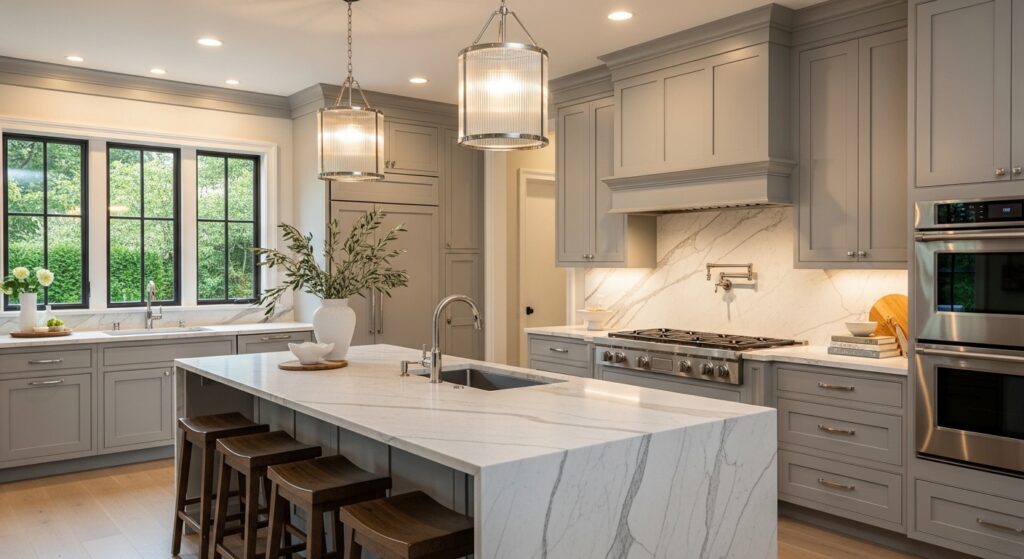
Kitchen
- Clean cabinets with classic finishes
- Simple hardware
- Subtle lighting
Bathroom
- Marble or stone finishes
- Soft color palette
- Modern fixtures with classic touch
Expert Insight: Why Transitional Style Works Long-Term
From a practical standpoint, transitional decorating is one of the smartest choices you can make.
Why?
Because it evolves with you.
You can update small elements over time without redesigning the entire space.
Trend Insight
Interior design trends are shifting toward “livable luxury”—and transitional style perfectly fits this movement.
Your Questions, Answered
Q1. What is transitional decorating style?
It’s a mix of traditional and modern design elements that creates a balanced, timeless look.
Q2. Is transitional style still popular in 2026?
Yes, it remains one of the most popular and practical interior design styles.
Q3. What colors are used in transitional design?
Neutral colors like white, beige, gray, and soft earth tones.
Q4. Can I mix modern and traditional furniture?
Yes, that’s the core idea of transitional decorating.
Q5. Is transitional style expensive?
Not necessarily—you can achieve it by mixing existing pieces smartly.