
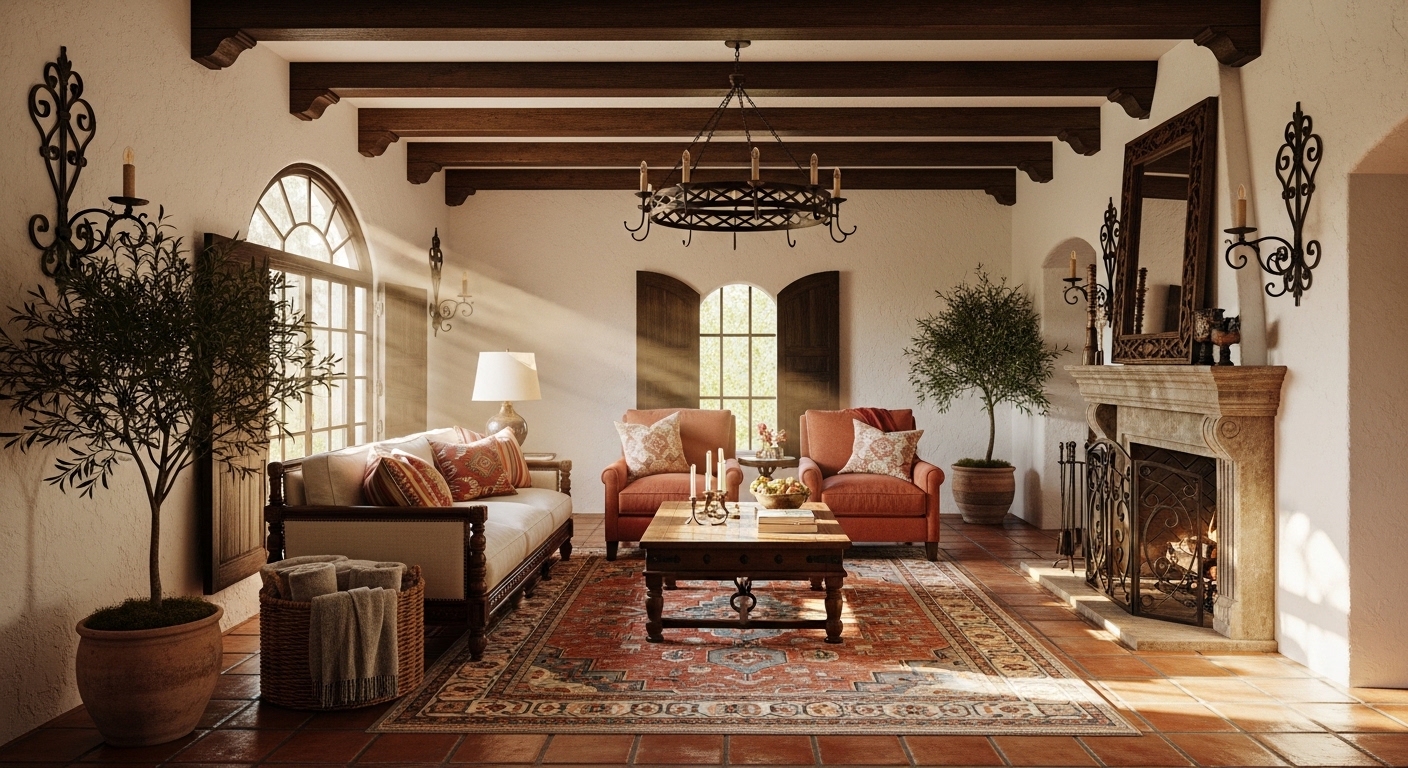
There is a distinct, undeniable warmth that washes over you when you step into a thoughtfully designed Spanish revival home. It isn’t just about the visual appeal; it is an atmospheric shift. For decades, the charm of spanish style homes interior design has captivated homeowners and architects alike, remaining remarkably immune to the fleeting micro-trends that cycle through Pinterest and TikTok.
Why does this style endure? Because it is rooted in earthy authenticity. Whether you are renovating a historic 1920s Spanish Colonial in Southern California or looking to inject Mediterranean warmth into a modern new-build in the Midwest, the principles remain the same. It is about embracing imperfections, celebrating raw materials, and creating spaces that feel intimately connected to the earth.
In my years analyzing home design and architectural trends, I’ve noticed that many mainstream publications—like Better Homes & Gardens—often reduce this rich aesthetic to a basic checklist: white walls and a cactus. But achieving true Spanish interior design requires a much deeper understanding of architectural bones, historical context, and tactile materials.
Table of Contents
In this guide, we are going beyond the surface. We will break down the essential elements, modern adaptations, and actionable ways to weave the soul of Spanish architecture into your living spaces.
The Core Elements of Spanish Style Homes Interior Design
To successfully execute a Spanish-inspired interior, you must focus on the structural and material elements that define the style. It is less about the furniture you buy and more about the canvas you create.
1. Earthy Color Palettes and Plaster Walls
The foundation of any Spanish interior begins with the walls. Forget standard flat drywall. Authentic Spanish homes utilize stucco or hand-troweled plaster to create texture and depth. This tactile surface catches natural light beautifully, adding a rustic softness to the room.
When it comes to color, the palette is directly inspired by the Mediterranean landscape:
- Warm Whites and Creams: The staple backdrop. Avoid sterile, cool-toned whites. Opt for shades with subtle yellow or umber undertones.
- Terracotta and Rust: Used to ground the space, often echoing the clay roofs outside.
- Deep Accents: Cobalt blue, emerald green, and deep mustard yellow are frequently used sparingly in tilework or textiles to break up the neutral warmth.
2. Architectural Marvels: Exposed Wooden Beams and Archways
If there is one architectural signature of a Spanish style homes interior, it is the curve. Arched doorways, arched windows, and curved alcoves (often used to display ceramics or art) soften the rigid geometry of standard home builds.
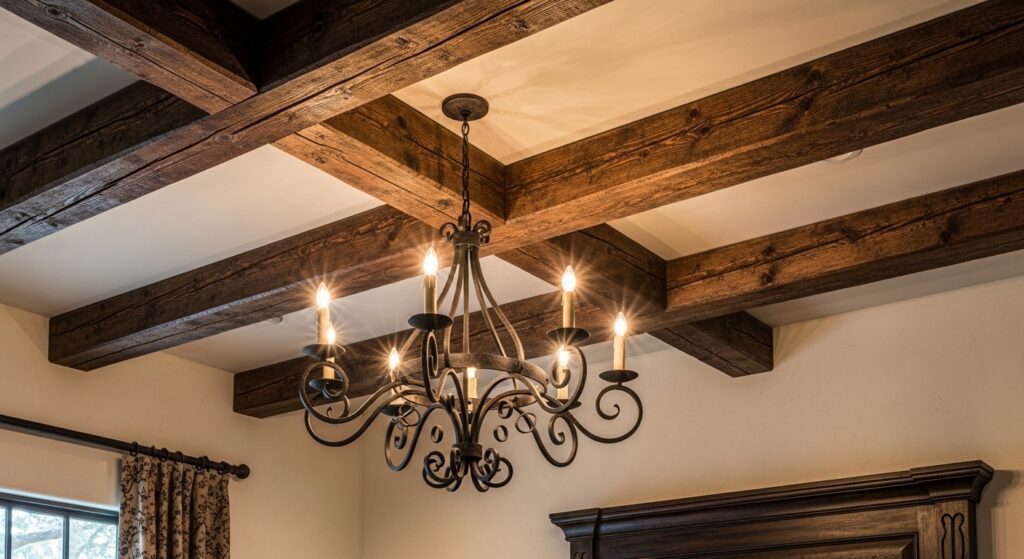
Above you, exposed wooden beams—typically crafted from dark, distressed wood like walnut, cedar, or reclaimed oak—are essential. These beams create a striking visual contrast against the soft white plaster ceilings. If your home doesn’t naturally have high ceilings or structural beams, installing authentic-looking faux wooden beams can immediately shift the room’s energy from basic to bespoke.
3. The Magic of Terracotta and Painted Tiles
Flooring is where Spanish design truly shines. Traditional interiors rely heavily on natural terracotta floor tiles. The slight variations in color and shape inherent in handmade Saltillo tiles provide an organic, lived-in feel that pristine porcelain simply cannot replicate.
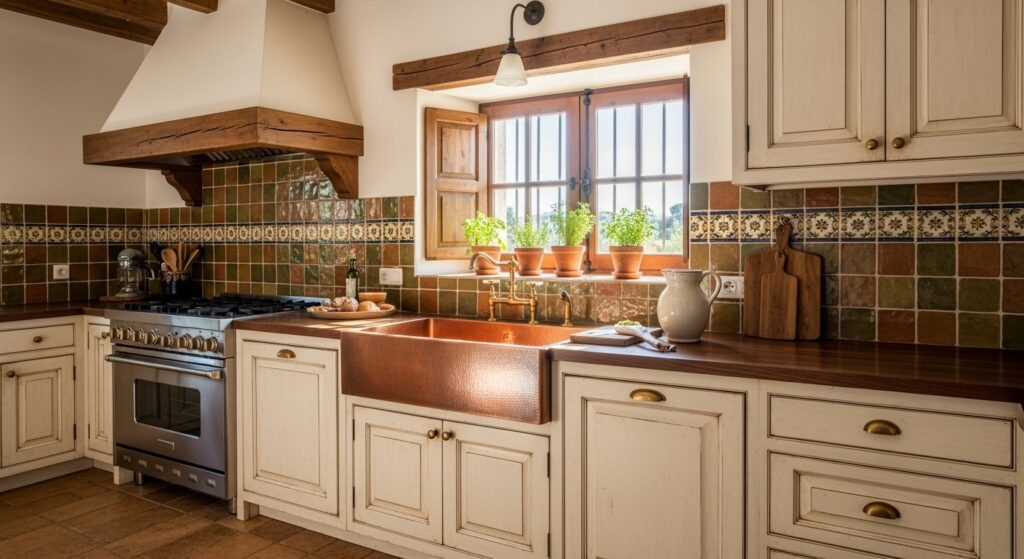
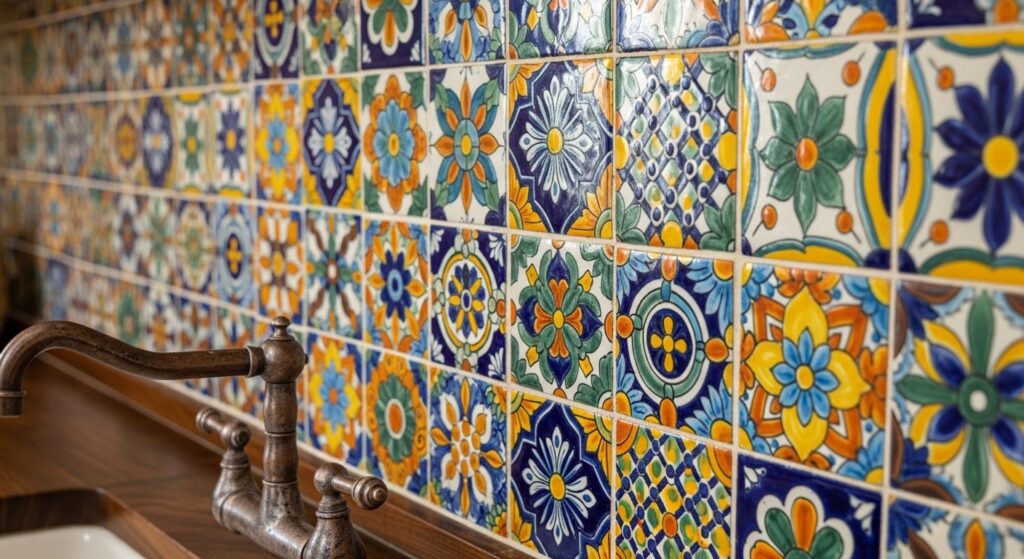
Beyond the floor, hand-painted tiles (like Talavera or Majolica) are the jewelry of the home. They are strategically placed to add vibrant pops of color and intricate geometric patterns.
- Where to use them: Stair risers, kitchen backsplashes, fireplace surrounds, and bathroom accents.
4. Wrought Iron Accents and Hardware
Heavy, dark metals provide the necessary visual weight to balance the light plaster and warm terracotta. Wrought iron is a non-negotiable element in Spanish interior design. Look for opportunities to incorporate it structurally and decoratively:
- Staircase railings with intricate scrollwork.
- Heavy iron chandeliers and wall sconces.
- Door hardware, cabinet pulls, and exposed hinges.
- Curtain rods and fireplace screens.
Modern Spanish Interior Design: Blending the Old and New
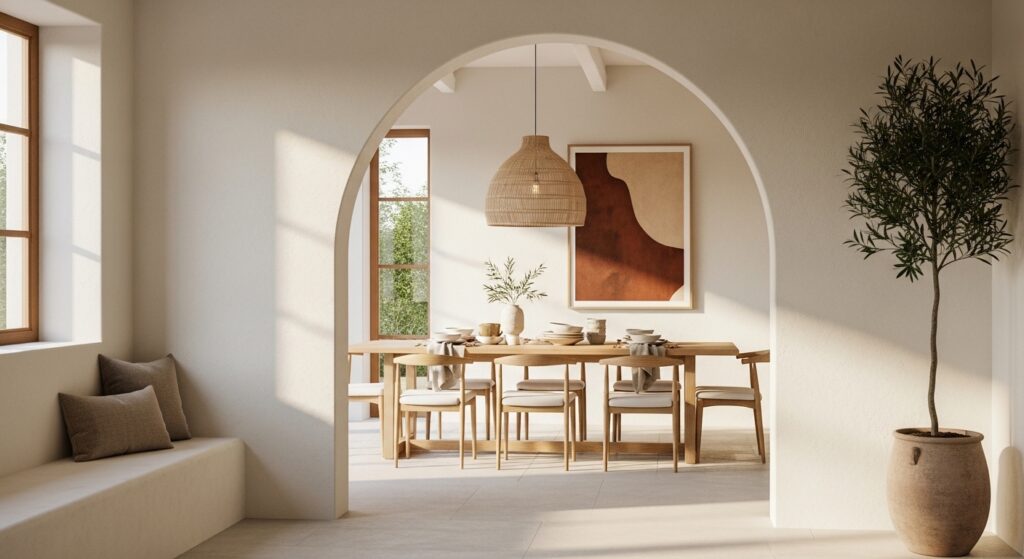
A common challenge I see homeowners face is the fear that a Spanish interior will feel too heavy, dark, or dated. The solution is Modern Spanish Revival. This contemporary take respects the historical elements but lightens the overall mood, making it perfect for 2026 and beyond.
To modernize the look, apply the 80/20 rule: 80% clean, contemporary lines and 20% rustic, traditional Spanish elements.
How to execute the modern blend:
- Lighten the Wood: Instead of heavy, dark espresso stains, opt for lighter, matte-finished woods like white oak for furniture and cabinetry.
- Streamline the Iron: Swap out highly ornate, overly curly wrought iron for fixtures with cleaner, more geometric lines in a matte black finish.
- Curated Minimalism: Traditional Spanish homes could sometimes veer into clutter. The modern approach is heavily curated. Let the architecture breathe. Choose a few statement pieces of oversized pottery or art rather than filling every corner.
Room-by-Room Guide to Spanish Revival Decor
Let’s apply these principles to specific spaces within your home to ensure a cohesive flow.
The Living Room
The focal point of a Spanish style living room is almost always the fireplace. A classic stucco fireplace, perhaps accented with a row of painted tiles along the mantel or hearth, grounds the space.
For furniture, prioritize comfort and scale. Think deep, oversized linen or leather sofas paired with heavy, carved wooden coffee tables. Introduce textiles through woven wool rugs, throw blankets featuring Aztec or Southwestern-inspired motifs, and velvet accent pillows.
The Kitchen
Spanish kitchens are incredibly inviting. They lean away from the ultra-modern, sterile aesthetic.
- Cabinetry: Dark, distressed wood cabinets or, conversely, sleek cream cabinets with dark iron hardware.
- Backsplash: This is your canvas for vibrant, hand-painted Spanish tiles.
- Sinks and Fixtures: An apron-front copper or fireclay sink paired with an oil-rubbed bronze or unlacquered brass faucet adds instant vintage appeal.
- Display: Open shelving displaying copper cookware, terracotta pitchers, and ceramic bowls adds functional decor.
The Bedroom and Bathroom
In the bedroom, a heavy, dark wood or wrought iron canopy bed makes a stunning centerpiece against plaster walls. Keep bedding light and textured with organic cottons and linens.
For the bathroom, consider an arched shower entryway. Use patterned cement tiles for the floor and line the shower walls with irregular, glossy zellige tiles to reflect light and create a spa-like, Mediterranean retreat.
Key Takeaways
- Texture is Everything: Prioritize hand-troweled stucco or plaster walls over flat drywall.
- Embrace Arches: Soften room transitions with arched doorways and rounded alcoves.
- Authentic Flooring: Utilize terracotta (Saltillo) tiles for warmth and organic imperfection.
- Accent with Iron: Incorporate wrought iron or matte black hardware, lighting, and railings for visual contrast.
- Modernize Carefully: Blend traditional elements with cleaner lines and lighter woods to keep the space feeling current, not dated.
Conclusion
Mastering a Spanish style homes interior is about creating a space that feels grounded, historic, and effortlessly welcoming. By focusing on the structural elements—the plaster, the wood, the iron, and the clay—you build a timeless foundation that will outlast any fleeting design trend.
Whether you are doing a full remodel or just want to introduce a touch of Mediterranean warmth into your current space, remember that imperfection is part of the charm. Let the materials speak for themselves.
Ready to start your design journey? Begin by assessing your current lighting fixtures and hardware. Swapping out generic brushed nickel for heavy wrought iron or matte black is the easiest, most cost-effective first step toward achieving your dream Spanish revival home.
Your Questions, Answered
What defines a Spanish style interior?
Spanish style interiors are defined by warm, earthy color palettes, textured stucco or plaster walls, exposed dark wood ceiling beams, terracotta floor tiles, hand-painted decorative tiles, and wrought iron architectural accents.
How can I make my modern home look more Spanish?
You don’t need a total rebuild. Start by changing your hardware to matte black or wrought iron. Introduce warm terracotta accents through pottery or textiles. If budget allows, add a faux wooden beam to your ceiling, replace a standard doorway with an arch, or update your kitchen backsplash with vibrant Talavera tiles.
What colors are used in Spanish interior design?
The dominant colors are warm neutrals (creams, warm whites, soft beiges) to mimic plaster. These are accented by earth tones like terracotta, rust, and clay. For bolder contrast, Spanish design utilizes deep Mediterranean blues, emerald greens, and mustard yellows, usually introduced via tilework or textiles.
Where can I find authentic decor pieces for this style?
Sourcing the right pieces is critical. While big-box stores occasionally have pieces that fit the aesthetic, you will get the best results by exploring vintage markets, importing tiles directly from artisans, or consulting a trusted home interior online shop guide to find curated, authentic Spanish and Mediterranean homewares.