
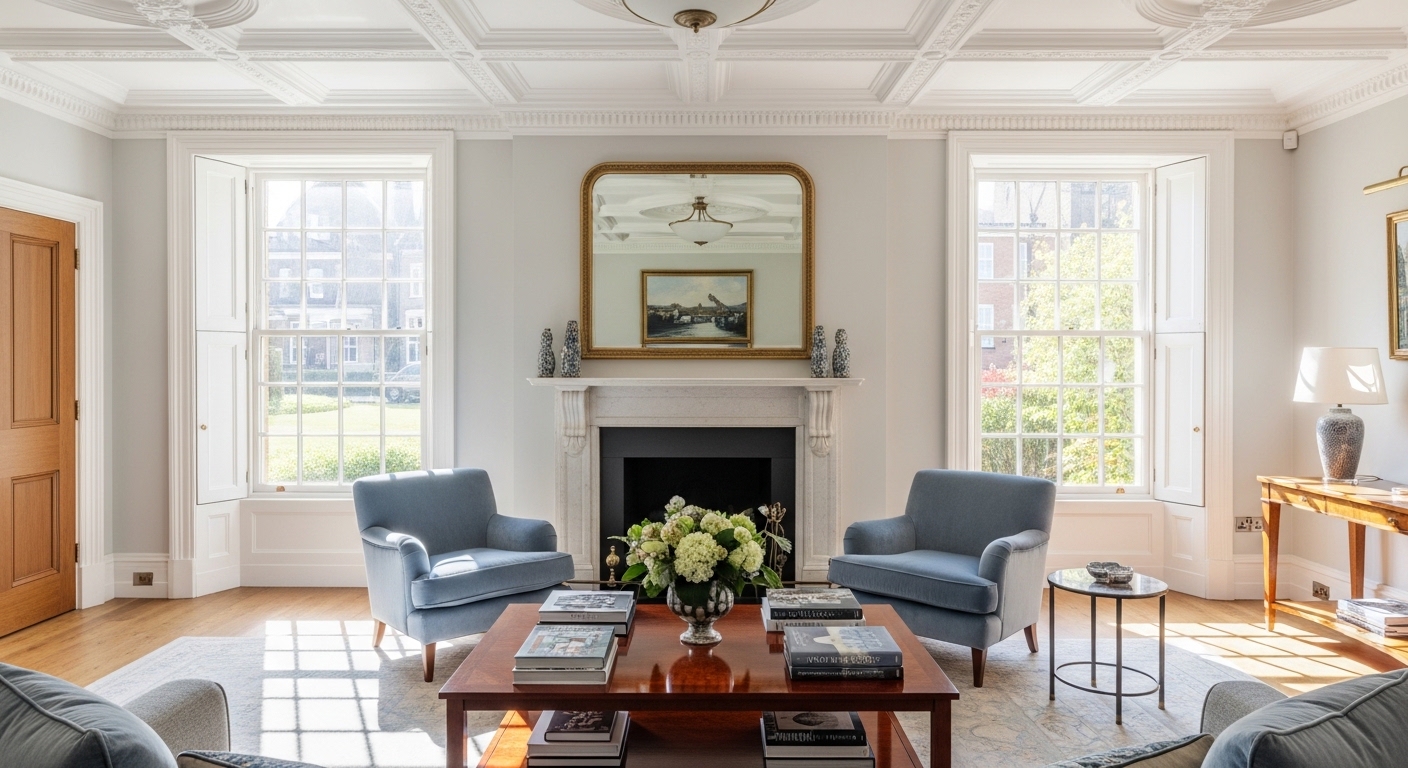
Stepping into a Georgian-style home feels like stepping into a masterclass of balance and grace. Born in the era of King George I through IV (1714–1830), this design style remains the gold standard for luxury and proportion. Whether you live in an authentic period property or want to bring a touch of “Bridgerton” chic to a modern suburban build, Georgian Style Homes Interior offer a blueprint for a home that never goes out of style.
In this guide, we will break down the essential elements of Georgian interior design—from the mathematics of symmetry to the specific color palettes that define the era.
Table of Contents
What Defines a Georgian Style Homes Interior?
At its heart, Georgian design is about harmony. Influenced by the classical architecture of Greece and Rome, designers of this era believed that a room should feel “right” the moment you walk in. This was achieved through a few non-negotiable principles.
The Rule of Symmetry
If you take a photo of a Georgian room and cut it down the middle, both sides should nearly mirror each other. This applies to:
- Windows: Evenly spaced sash windows.
- Furniture: Pairs of armchairs or matching side tables.
- Layout: A central fireplace flanked by identical built-in bookshelves.
High Ceilings and Grand Proportions
Georgian homes are famous for their “airiness.” The ground floor and first floor usually feature soaring ceilings and large windows, designed to maximize natural light before the invention of electricity.
The Georgian Color Palette: From Dusty Tones to Bold Statements
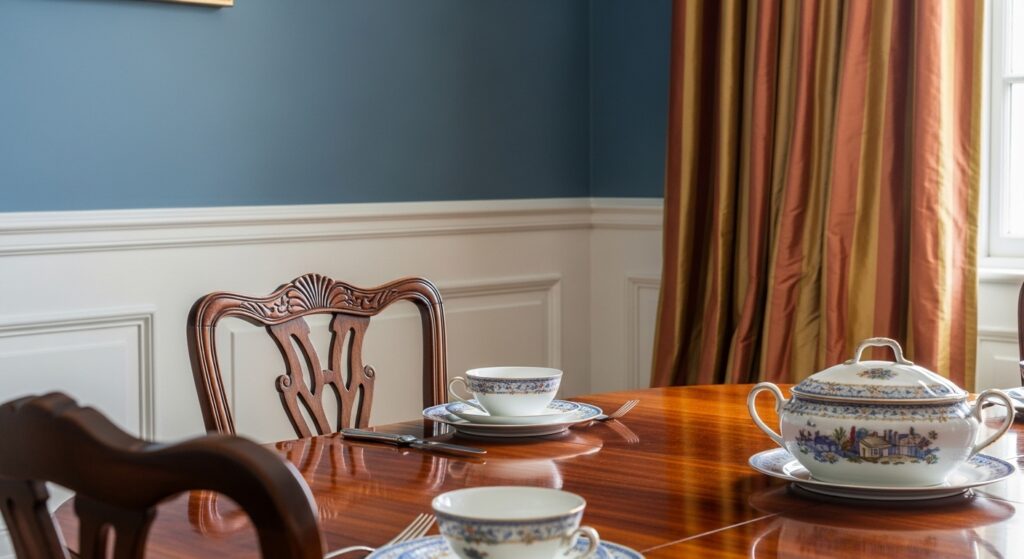
Early Georgian interiors favored darker, richer colors like deep burgundies and forest greens. However, as the style evolved into the late Georgian and Regency periods, the palette lightened significantly.
Popular Georgian Colors Include:
- Sage Green & Olive: Bringing the outdoors in.
- Sky Blue & Wedgwood Blue: Soft, airy, and sophisticated.
- Dusty Rose & Terracotta: Earthy yet refined.
- Stone & Off-White: Used primarily on woodwork and moldings to highlight architectural details.
Expert Tip: To achieve an authentic look, use a “flat” or matte finish for your wall paint. The Georgians didn’t have the high-gloss synthetics we have today!
Key Architectural Features: The “Bones” of the Room
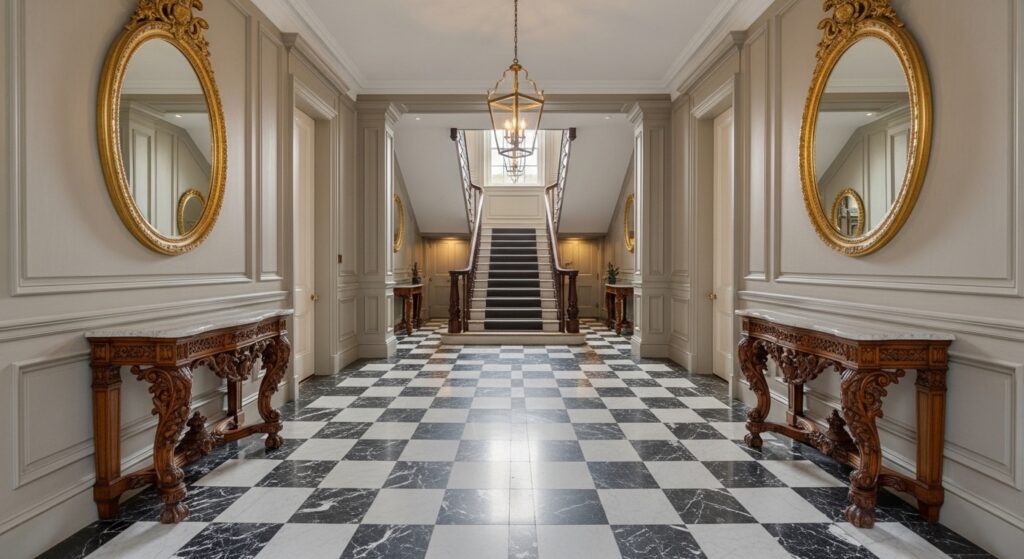
You cannot have a Georgian interior without focusing on the woodwork and plasterwork. These details add the “texture” that makes the style feel expensive.
1. Elaborate Moldings and Cornicing
Look up! A Georgian ceiling is rarely plain. Look for:
- Dentil moldings: Small, block-like patterns that resemble teeth.
- Ceiling Roses: Ornate plaster circles where a chandelier hangs.
- Daddo Rails: A horizontal rail running along the wall (usually about 3 feet up) to protect the plaster from chair backs.
2. The Statement Fireplace
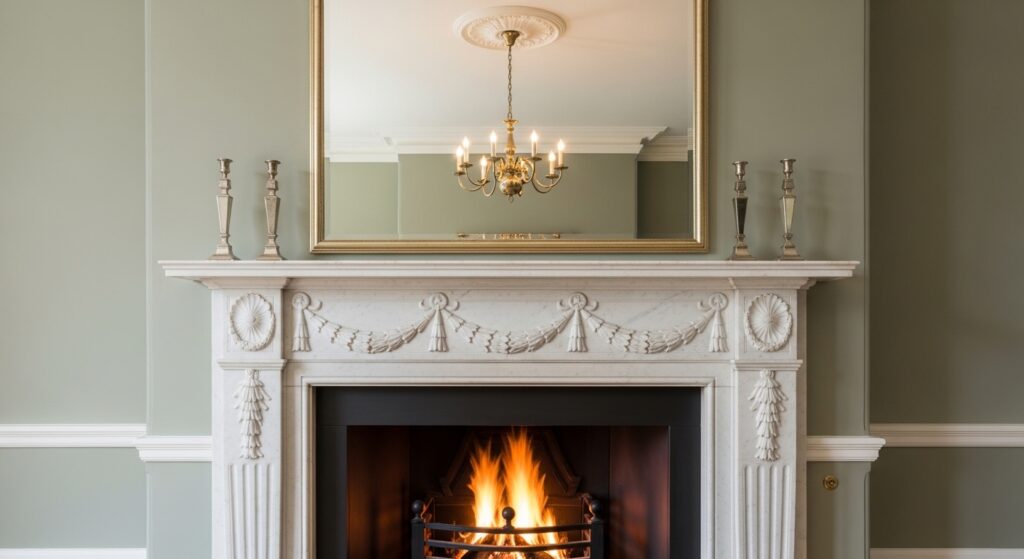
The fireplace was the soul of the Georgian room. These were typically made of white marble or carved wood, often featuring neoclassical motifs like urns, swags, or Greek key patterns. Even if your fireplace is non-functional, dressing it with a large “overmantel” mirror is a classic Georgian move.
Furniture and Textiles: Choosing the Right Pieces
Georgian furniture is characterized by its light, delicate silhouette compared to the heavy, chunky styles of the later Victorian era.
Mahogany is King
During the 18th century, mahogany became the preferred wood for master craftsmen like Chippendale, Hepplewhite, and Sheraton. Look for furniture with:
- Cabriole legs: S-curved legs ending in a decorative foot.
- Shield-back chairs: Chairs with a back shaped like a crest or shield.
- Drop-leaf tables: Perfect for the multifunctional rooms of the era.
Fabrics and Patterns
To soften the wood and stone, Georgians used high-quality textiles. Toile de Jouy, floral damasks, and heavy silks were common. For a modern twist, keep the patterns subtle—think wide vertical stripes in muted tones.
Modernizing the Georgian Look
You don’t need to live in a museum to enjoy this style. “Modern Georgian” is a growing trend that blends 18th-century structure with 21st-century comfort.
- Mix the Old with the New: Pair a sleek, modern velvet sofa with an antique mahogany coffee table.
- Neutralize the Walls: Use a crisp white or light grey on the walls to make traditional moldings pop.
- Minimalist Window Dressings: Instead of heavy velvet drapes, use simple Roman blinds or light linen curtains to let the architecture of the windows shine.
Lighting: Creating an Amber Glow
The Georgians relied on candlelight, which created a soft, warm atmosphere. To replicate this:
- Chandeliers: Brass or glass-arm chandeliers are a must for dining rooms.
- Wall Scones: Place them in pairs on either side of a mirror or fireplace.
- Symmetry in Lamps: Use matching table lamps on a sideboard to maintain that essential balance.
Summary Checklist for Georgian Interiors
| Feature | Georgian Style Requirement |
| Layout | Strictly symmetrical and balanced. |
| Walls | Wood paneling or wainscoting with a dado rail. |
| Windows | Large sash windows with light, airy curtains. |
| Flooring | Wide oak planks or black-and-white marble tiles in entries. |
| Ceilings | Decorative plasterwork and central roses. |
Conclusion
Creating a Georgian style home interior is about more than just buying old furniture; it’s about embracing a philosophy of balance, light, and understated luxury. By focusing on symmetry and investing in quality architectural details like crown molding and classic color palettes, you can create a home that feels both historic and incredibly livable.
Ready to transform your space? Start by decluttering your layout to find the central axis of your room, and let the symmetry lead the way!