
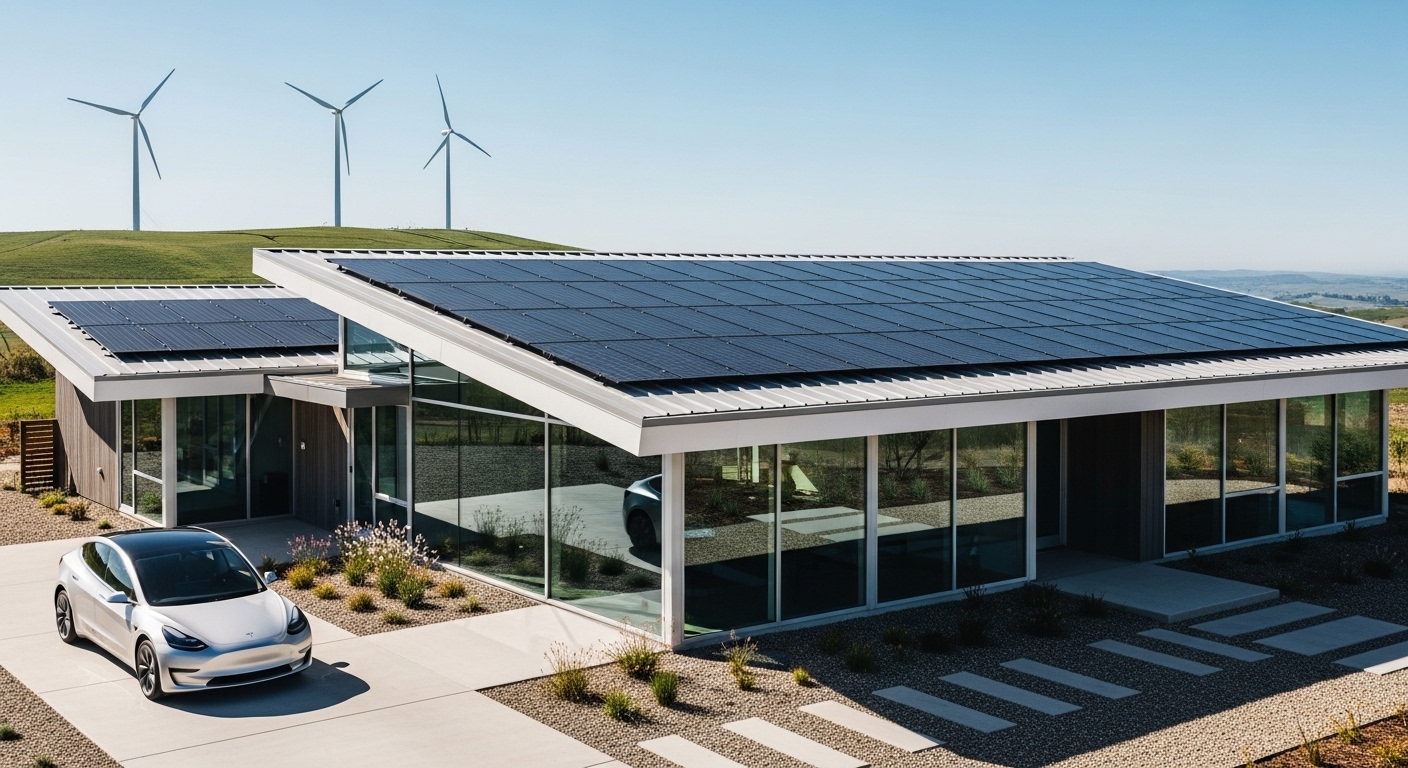
Imagine a world where the energy we use to light our homes and charge our phones never runs out. It sounds like science fiction, but it’s actually the reality of renewable technologies.
If you’ve been hearing a lot about “going green” or “net zero” and felt a little overwhelmed by the jargon, you aren’t alone. Transitioning to a cleaner lifestyle starts with understanding the tools that make it possible. In this guide, we’re stripping away the complex engineering talk to explain exactly what renewable technologies are and why they are the future of our homes and our planet.
Table of Contents
What is Renewable Technology? (Simple Definition)
At its simplest, renewable technology refers to any method or device that captures energy from natural sources that are constantly replenished.
Unlike fossil fuels (coal, oil, and gas), which take millions of years to form and release harmful pollutants when burned, renewable sources are “infinite.” As long as the sun shines, the wind blows, and the earth stays warm, we have access to power.
The Main Difference: Renewables vs. Fossil Fuels
To understand the value of these technologies, we have to look at the “why.”
- Fossil Fuels: Limited supply, high carbon emissions, fluctuating prices.
- Renewable Technologies: Unlimited supply, little to no emissions, long-term cost savings.
The Big Five: Types of Renewable Technologies
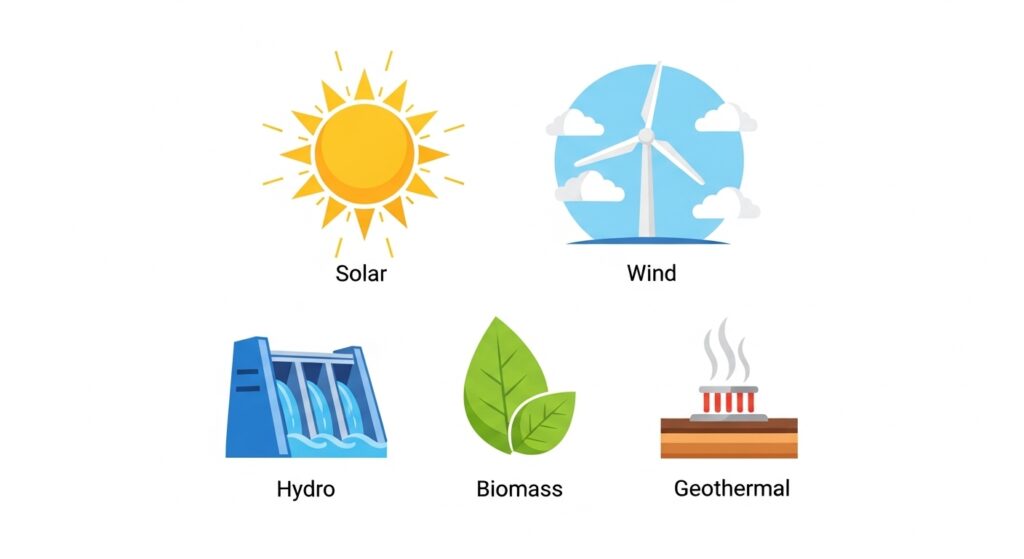
There are several ways to harvest energy from nature. Here are the five most common technologies you’ll encounter today.
1. Solar Energy (Solar PV and Thermal)
Solar is the most popular choice for homeowners. It works by using Photovoltaic (PV) cells—those dark, shiny panels you see on roofs—to convert sunlight directly into electricity.
- How it works: When sunlight hits the cell, it creates an electric field.
- Practical Use: Powering home appliances, charging electric vehicles (EVs), and heating water.
2. Wind Power
Wind technology uses the kinetic energy of moving air. While we usually think of massive wind farms on hillsides, smaller “micro-wind” turbines are becoming an option for rural properties with high wind speeds.
- How it works: Wind turns the blades of a turbine, which spins a generator to create electricity.
- Practical Use: Generating large-scale electricity for the power grid.
3. Hydroelectric Energy
This is one of the oldest forms of renewable energy. It uses the power of moving water.
- How it works: Water flowing through a dam or a river turns a turbine.
- Practical Use: Most often used by utility companies to provide steady, “baseload” power to cities.
4. Geothermal Energy
Did you know the ground beneath your feet stays at a constant temperature year-round? Geothermal technology taps into the heat from the Earth’s core.
- How it works: Pipes buried underground circulate liquid to absorb heat in the winter and release it in the summer.
- Practical Use: Ground-source heat pumps are a fantastic way to heat and cool homes efficiently.
5. Biomass Energy
Biomass involves burning organic materials, like wood pellets or plant waste, to create heat or electricity.
- How it works: Burning the material creates steam that drives a turbine, or provides direct heat for a stove.
- Practical Use: Wood-burning stoves or industrial-scale heating.
Why Should You Care About Renewable Technologies?
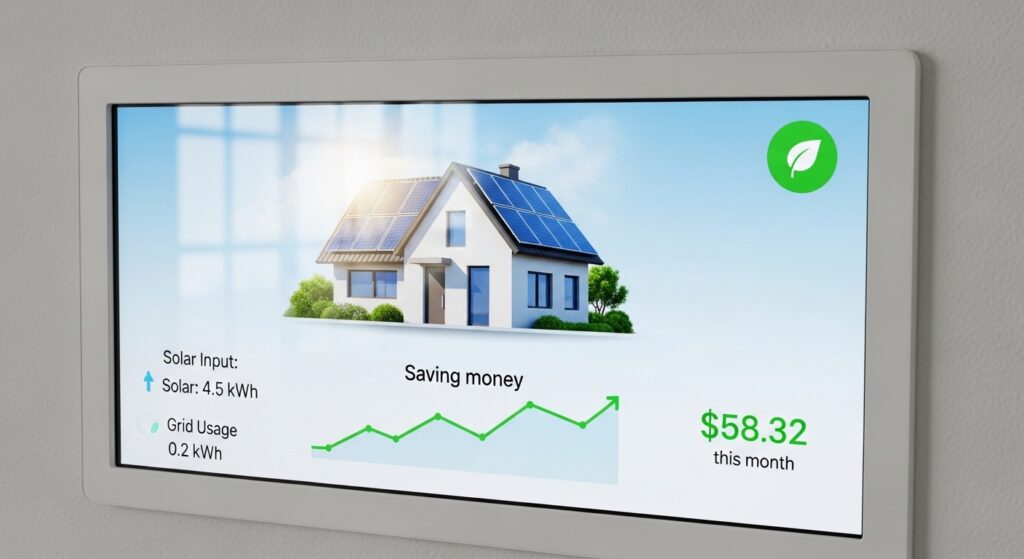
You don’t have to be an environmental activist to appreciate the benefits of green tech. For the average person, it’s about three things: Savings, Security, and Sustainability.
1. Lower Energy Bills
While the upfront cost of installing solar panels or a heat pump can be high, the long-term savings are massive. Once the equipment is paid off, the “fuel” (sunlight or ground heat) is 100% free.
2. Energy Independence
Using renewable technologies means you are less reliant on the “grid.” When global oil prices spike due to political unrest, your solar-powered home remains unaffected.
3. Reducing Your Carbon Footprint
Every kilowatt of energy generated by a renewable source is a kilowatt that didn’t come from burning coal. This is the most effective way for a single household to fight climate change.
Common Myths About Renewable Energy
Because these technologies are relatively new to the mainstream, there is a lot of misinformation out there. Let’s clear some of it up.
- Myth: “Solar panels don’t work on cloudy days.”
- Truth: Panels are less efficient in the shade, but they still generate electricity from diffused light. Even in the UK or Canada, solar is a viable option!
- Myth: “Renewable energy is too expensive.”
- Truth: The cost of solar panels has dropped by over 80% in the last decade. With government tax credits and rebates, it’s more affordable than ever.
- Myth: “Wind turbines are noisy.”
- Truth: Modern turbines are remarkably quiet. From 300 meters away, a wind turbine is no louder than a kitchen refrigerator.
How to Get Started: A Beginner’s Path to Green Living
You don’t need to spend $30,000 on a full solar array tomorrow to make a difference. Here is a step-by-step path for beginners:
Step 1: The Energy Audit
Before adding new technology, make sure your home isn’t “leaking” energy. Check your insulation, seal gaps in windows, and switch to LED bulbs.
Step 2: Switch Your Energy Provider
Many utility companies now offer a “Green Tariff.” By choosing this, you ensure that the money you pay for electricity goes toward purchasing energy from renewable farms.
Step 3: Small-Scale Solar
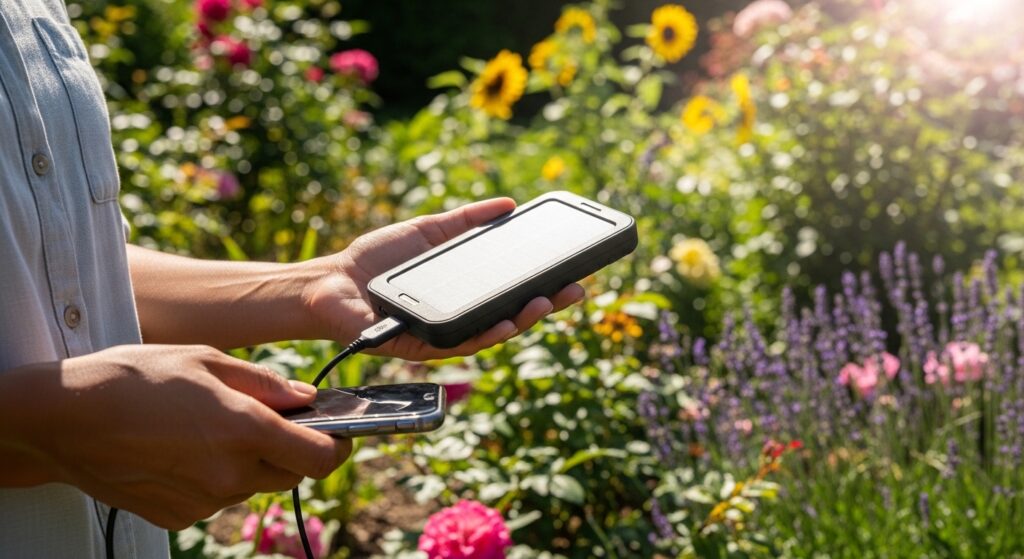
Try small solar gadgets first. Solar-powered garden lights, phone chargers, or even a small solar-powered fountain can give you a feel for how the tech works.
Step 4: Major Installations
Once you’re ready, consult with a professional about a Solar PV system or a Heat Pump. Check for local government grants that can cover a large portion of the installation cost.
The Future of Renewable Technologies
We are currently in a “Green Revolution.” In the coming years, we will see even more exciting advancements:
- Battery Storage: Technology like the Tesla Powerwall allows you to store solar energy from the day to use at night.
- Solar Glass: Windows that look normal but actually generate electricity.
- Smart Grids: Homes that talk to each other to share excess energy.
Conclusion
Renewable technologies are no longer a “luxury” for the wealthy or a niche for scientists. They are practical, money-saving tools that are becoming part of our everyday lives. Whether it’s the solar panels on your neighbor’s roof or the wind farm you pass on the highway, these technologies are working 24/7 to create a cleaner, more stable world.
Are you ready to take the first step toward a sustainable home? Start by checking your local energy rebates today—you might be surprised at how much you can save by going green!
1 thought on “What Are Renewable Technologies? A Simple Beginner’s Guide”