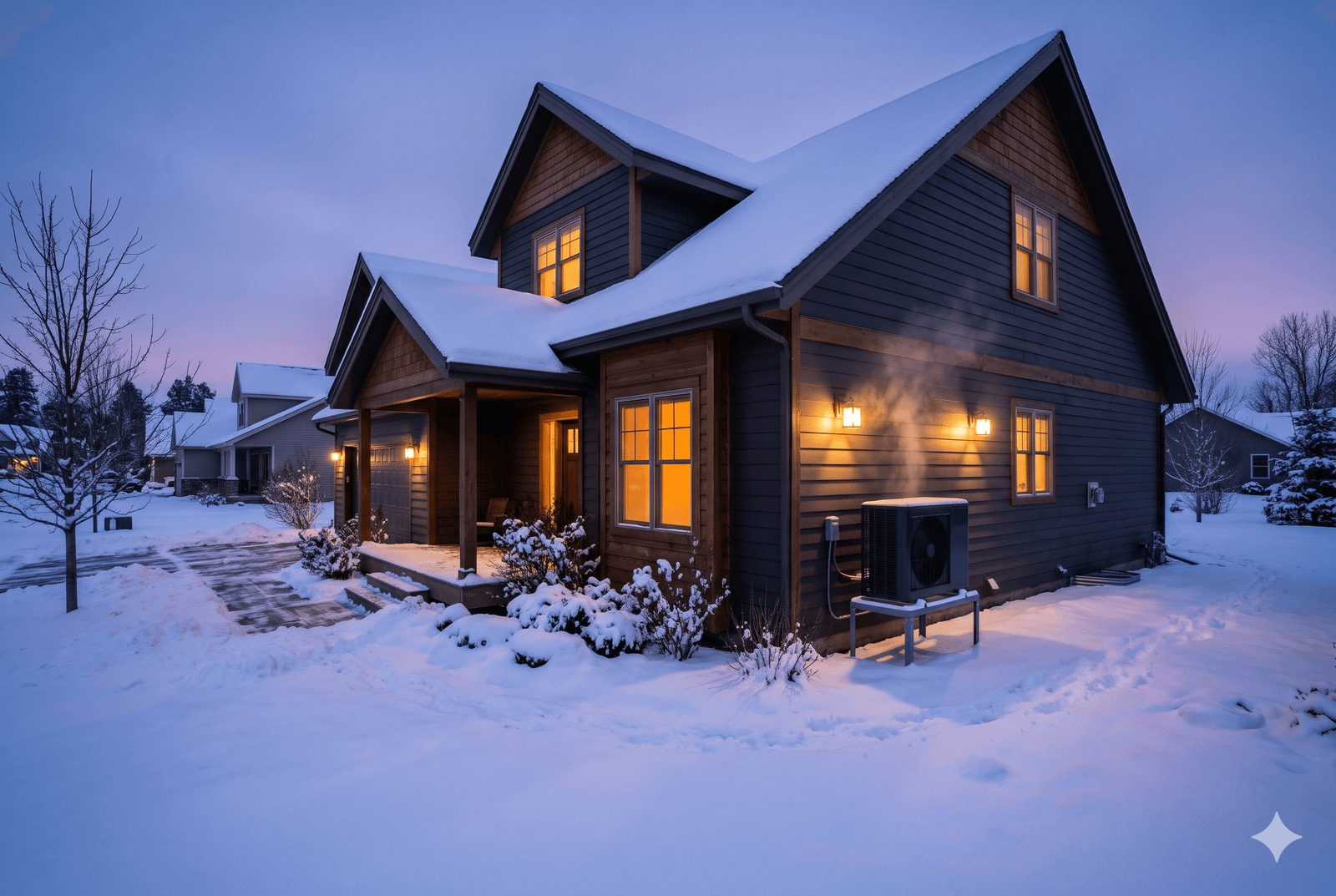
An air source heat pump can cut heating fuel use and keep a home comfortable through winter, but only when it is sized and set up correctly. Most first-winter regrets come from poor controls, not from the equipment itself.
Here is what US homeowners should know about how these systems work, what they cost and what surprises them after the first cold season.
Quick answer: An air source heat pump is often worth it for US homes when it is sized for winter heating and its backup heat is set correctly. It delivers more heat than the electricity it uses, but installed prices are high, and the federal 25C tax credit has ended.
How Does an Air Source Heat Pump Work?
An air source heat pump moves heat instead of burning fuel. It pulls thermal energy from outdoor air and carries it indoors through a refrigerant cycle. Because moving heat takes far less power than creating it, a modern unit delivers 3 to 4 units of heat per unit of electricity.
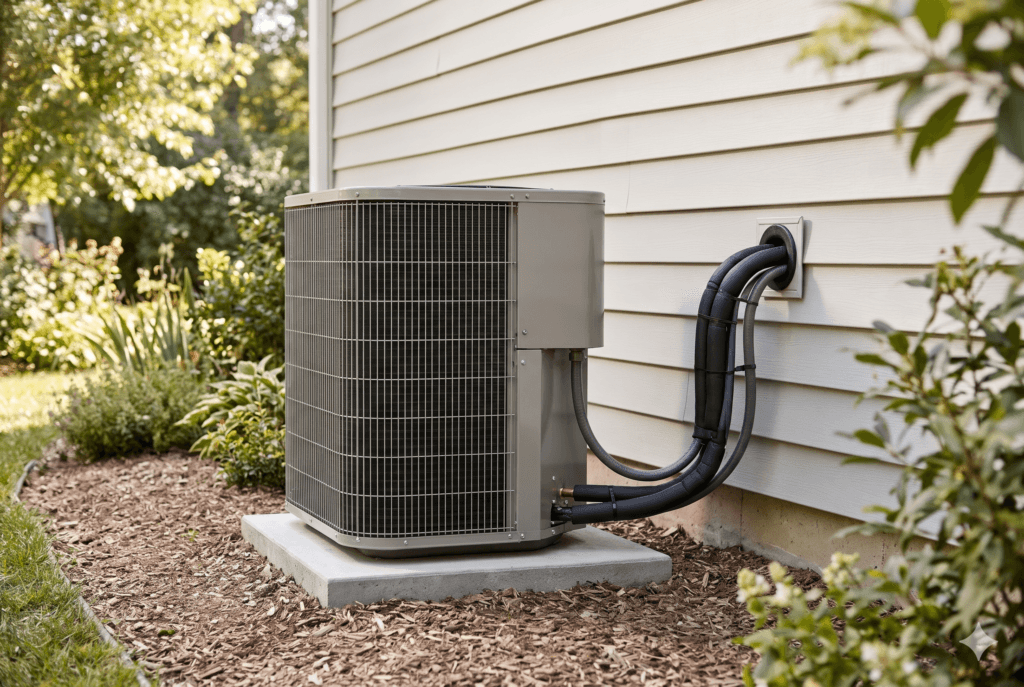
That ratio is called the coefficient of performance, or COP. Standard conditions usually give a COP of 3.0 to 4.0. A gas or propane furnace, by comparison, always stays under 100 percent efficiency.
An inverter air-to-air system also works in reverse during summer, acting as an air conditioner and dehumidifier. If you are comparing home energy options, our guide to renewable technologies for beginners gives useful background.
Can an Air Source Heat Pump Handle a Cold Winter?
Yes, modern cold-climate models can. They keep their full rated heating capacity down to 5°F and still make useful heat at -15°F to -22°F. The old reputation for failing in the cold came from fixed-speed compressors, which lost capacity quickly below 40°F. Variable-speed inverter compressors changed that.
The heat also feels different. A gas furnace blasts air at about 120°F in sudden cycles. A variable-speed heat pump sends a steady, gentle stream at 90°F to 100°F, which helps avoid cold spots.
A Minnesota field study by the Center for Energy and Environment tested cold-climate units paired with backup propane furnaces over a full heating season:
- Propane use fell by 52 to 89 percent.
- Net heating costs fell by $191 to $350 a year per household.
- Seasonal COP ranged from 2.51 to 2.78.
The study also showed why size matters. In cold regions, equipment should match the winter heating load, not the summer cooling load.
How to Protect the Outdoor Unit
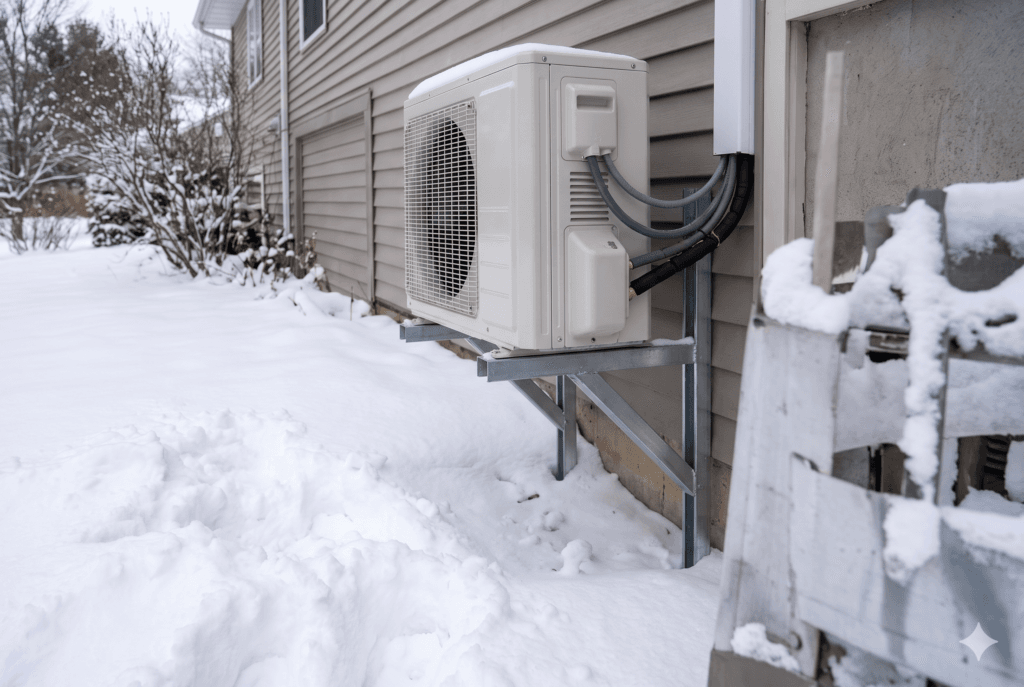
- Mount it at least 12 inches above your usual local snow depth.
- Keep it away from roof drip lines, eaves and valleys.
- Keep leaves, snow and debris two feet clear of the coil.
- Clean or replace air filters every one to three months.
If the coil ices over, never pour hot water on it or chip at it with tools. Water refreezes into thicker ice, and tools can puncture the coil.
Rubber mounting feet help stop vibration noise from reaching indoors. In severe climates, wind baffles and drain pan heaters stop defrost water from refreezing in the tray.
Why Is Your First-Winter Electric Bill So High?
A high first-winter bill usually comes from backup heat settings, not a broken system. Electric resistance heat strips are costly to run. They can switch on too often if an installer sets the changeover point at 25°F to 35°F, or if deep thermostat setbacks trigger them during recovery.
Ask your installer for three things:
- A Manual J room-by-room load calculation
- A calculated balance point set on the thermostat
- Lockout controls that keep auxiliary heat off above that balance point, except during defrost
Steam and Whooshing Sounds Are Usually Normal
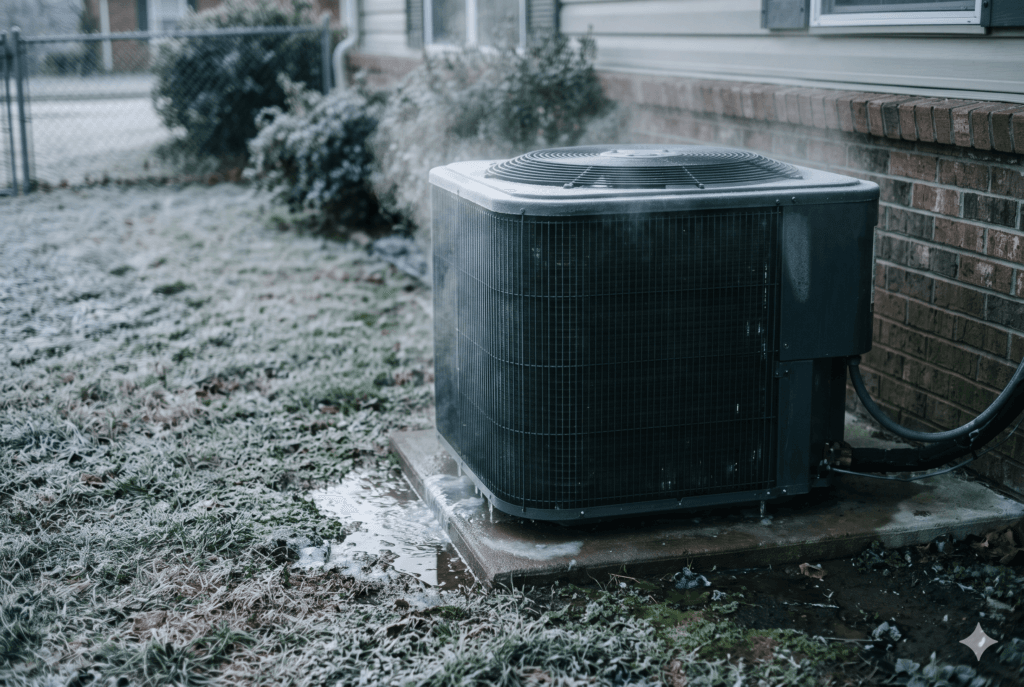
Frost forms on the outdoor coil in cold, damp weather. To clear it, the system runs a defrost cycle every 30 to 90 minutes for 5 to 15 minutes. You may hear a loud whoosh or see steam, puddles and a paused fan. All of that is normal.
Call a professional if the unit is encased in solid ice, stays in defrost for over 15 minutes, or the thermostat shows constant AUX heat.
What Does an Air Source Heat Pump Cost in the US?
Most US homeowners can expect to pay about $6,500 to $20,000 installed, before rebates, depending on the type of system. Older homes may need duct or electrical upgrades on top of that, so ask for a full written quote before comparing the price with a furnace.
| System or upgrade | Typical cost |
|---|---|
| Standard-efficiency heat pump | $6,500 to $10,500 |
| Variable-speed inverter model | $10,000 to $16,000 |
| Cold-climate or dual-fuel system | $11,000 to $20,000 |
| Ductwork changes | $1,000 to $5,000 |
| Electrical panel upgrade | $1,500 to $4,000 |
Tax credit update: the federal Section 25C credit ended for systems placed in service after December 31, 2025, so a new installation can no longer claim it.
Income-qualified households may still get a Home Electrification rebate of up to $8,000, but only where their state has launched the program. Many utilities and states run their own rebates, so check with your state energy office and utility before you sign.
Going fully electric also removes the monthly gas connection fee and protects you from fuel price swings. Projected lifespan is 20 to 25 years, about double a standard furnace or boiler. Homeowners planning bigger energy upgrades can also compare home solar costs and savings.
So, Is It Really Worth It?
For many US homes, yes, if the system is sized for winter and its backup heat is set up properly. Before you buy, get a Manual J calculation and a full quote that includes ducts and electrical work. Then compare it with your current heating costs.
Frequently Asked Questions
Do air source heat pumps work in very cold weather?
Yes. Modern cold-climate models keep full rated capacity down to 5°F and still produce useful heat at -15°F to -22°F.
Why is steam coming from my heat pump?
Steam is usually a normal defrost cycle melting frost from the outdoor coil. Call a professional if the unit is covered in solid ice or stays in defrost for over 15 minutes.
Is there still a federal tax credit for heat pumps?
No. The Section 25C credit ended for systems placed in service after December 31, 2025. State, utility and income-based rebates may still be available, depending on where you live.
4 thoughts on “Is an Air Source Heat Pump Really Worth It? What Homeowners Learn After Their First Winter”