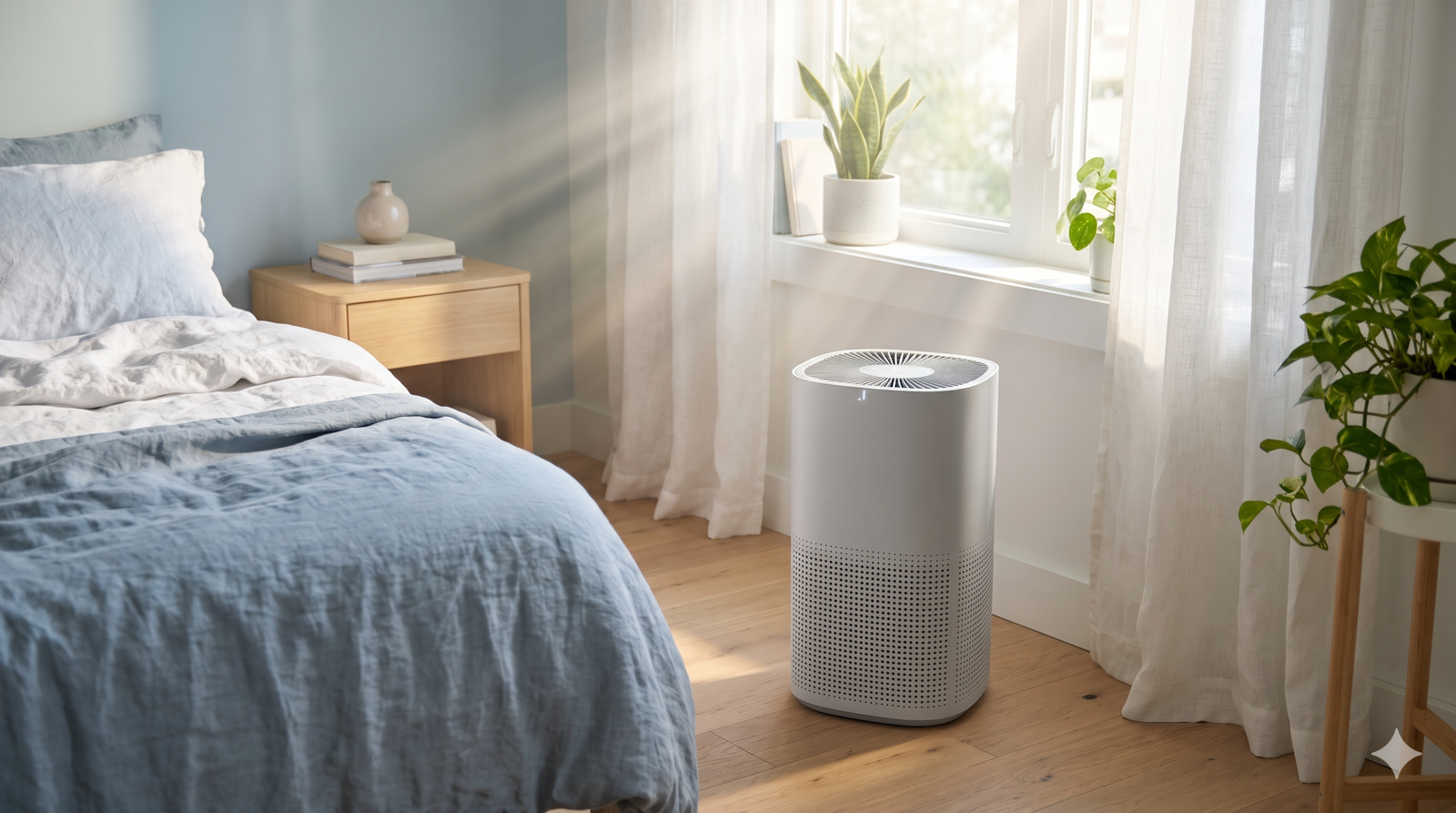
The best air purification starts with a machine that is big enough for your room. Most people who think their purifier does not work simply bought one that is too small, then trusted the coverage number on the box.
This guide shows US and Indian readers how to size a purifier, what filters really do and which mistakes to avoid.
Quick answer: The best air purification comes from a true HEPA purifier with enough smoke CADR for your room, plus activated carbon for smells and gases. Aim for a smoke CADR of at least two-thirds of the room’s square footage, run it on a useful speed and replace filters on time.
Why Do So Many Air Purifiers Seem Not to Work?
Most purifiers seem to fail because they are too small for the room. Coverage claims on the box can assume as little as 2 air changes per hour. That may be fine on a mild day, but not during bad pollution, wildfire smoke or heavy pollen.

A simple fix is to halve the printed coverage when you plan for bad air days. So a unit labelled for 400 square feet is better treated as a 200 square foot purifier during those periods.
Placement matters as well. A portable purifier cleans the closed room it sits in, so one unit in a hallway will not clean the bedrooms beside it. Use one purifier per closed room. For open-plan spaces, two smaller units at opposite ends work better than one large one.
How Do You Size the Best Air Purification Setup?
Judge a purifier by its Clean Air Delivery Rate, or CADR, not its coverage label. CADR shows how much filtered air it delivers. Smoke CADR matters most because smoke particles are fine, like PM2.5. Multiply CFM by 1.7 to convert it to cubic metres per hour.
Use one of these simple sizing methods:
| Need | Rule | Example |
|---|---|---|
| Everyday use | Smoke CADR of at least 2/3 of the floor area | 180 sq ft room needs 121 CFM |
| Wildfire smoke or heavy pollution | Smoke CADR equal to the floor area | 180 sq ft room needs 180 CFM |
| Allergies | 5 air changes per hour | 41 m³ room needs about 205 m³/h |
Do Not Forget Ceiling Height
Floor area alone can mislead you, because the usual rules assume an 8-foot ceiling. Higher ceilings mean more air to clean, so you need a higher CADR.
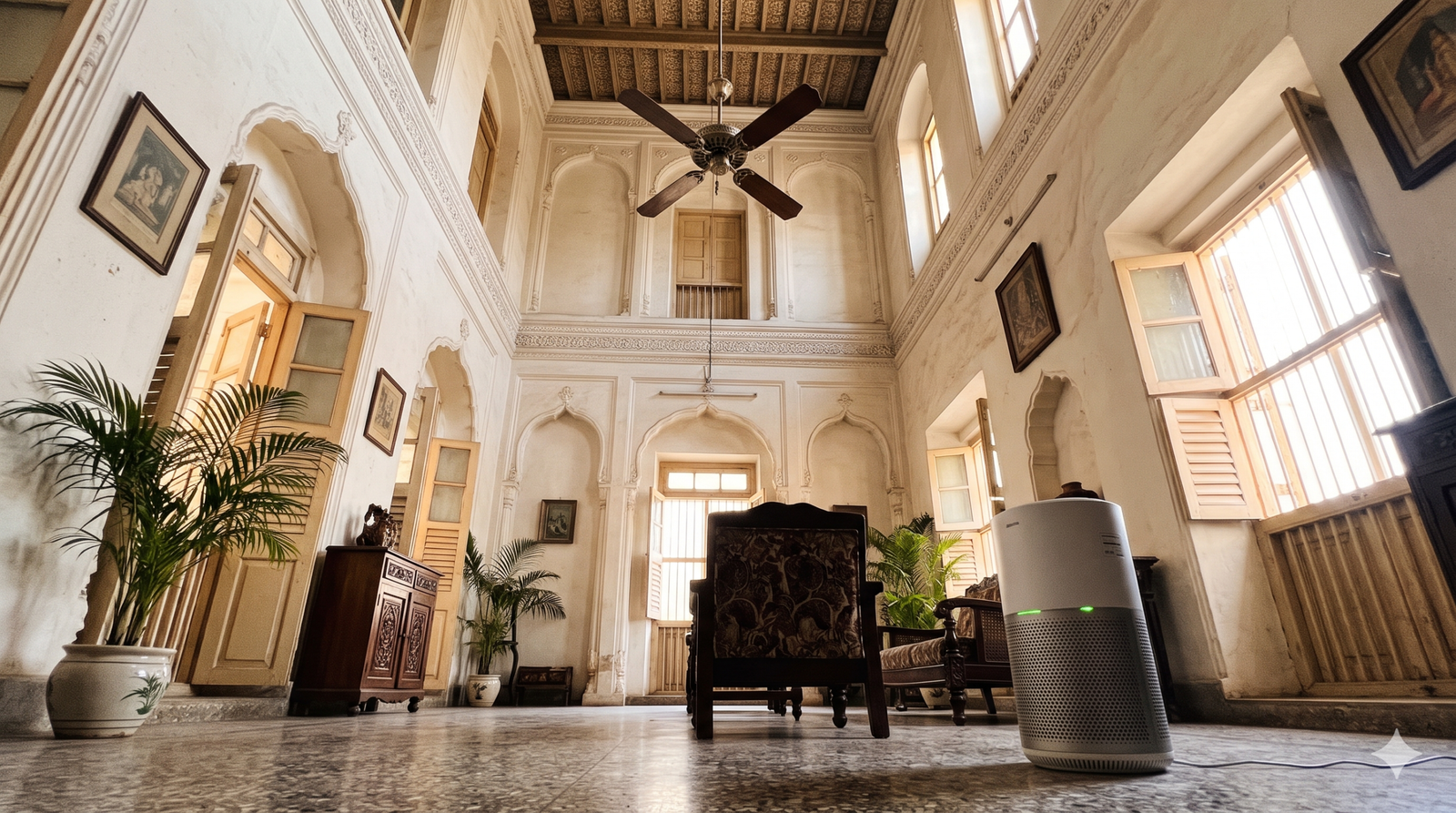
For Indian homes: Ceilings of 10 feet are common, and some older homes reach 12 feet. To find the room’s volume in cubic metres, multiply length by width by height in feet, then divide by 35.3. A 12 by 12 foot room with a 10-foot ceiling holds about 41 cubic metres. Multiply that by your target air changes to get the CADR you need.
Which Filters Give the Best Air Purification?
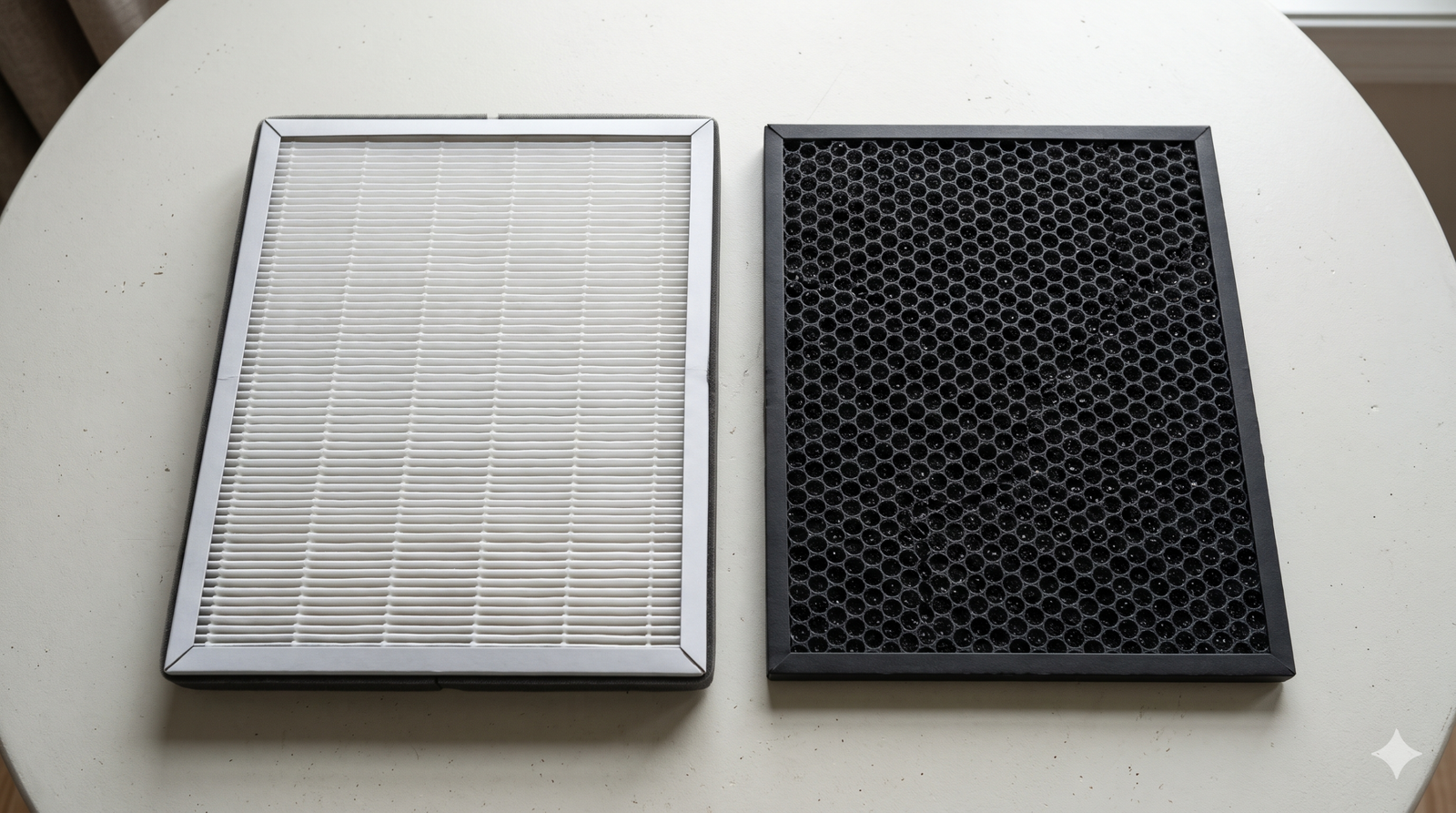
The best air purification for most homes pairs a true HEPA filter for particles with activated carbon for gases and smells. HEPA handles dust, pollen and smoke particles. Carbon handles odours, VOCs and formaldehyde, which a particle filter cannot catch.
- H13: Captures at least 99.95 percent of particles at the hardest size to trap.
- H14: Captures at least 99.995 percent.
- Labels to avoid: HEPA-type, HEPA-like and HEPA-style are not held to a verified standard.
- Activated carbon: Adds removal of smells, VOCs and formaldehyde.
Do not overpay for filter grade alone. A strong fan matters more. An H14 filter on a weak fan protects less of your room than an H13 filter on a strong one, because a purifier can only clean the air that passes through it.
Why Ionizers and Ozone Machines Disappoint
Ionizers charge particles so they settle on nearby surfaces such as walls and furniture. That moves dust around instead of trapping it, and normal movement can stir it back up. Some ionizers also make ozone, a lung irritant.
Ozone generators are worse. The US EPA says that at levels within health standards, they do little to clean indoor air, and ozone itself can harm health. In California, certified air cleaners cannot emit more than 0.050 ppm of ozone. That is a useful label to look for in the US.
What Maintenance Mistakes Waste Your Money?
The biggest mistakes are late filter changes, washing the wrong filter and running the fan too low. A clogged filter cuts airflow, so the purifier gets louder and delivers less clean air. A saturated filter can also stop capturing new pollutants.

- Pre-filter: Wash or vacuum every 2 to 4 weeks.
- Carbon filter: Replace every 3 to 6 months.
- HEPA filter: Replace every 6 to 12 months, or as the maker advises.
- Never wash: Water ruins HEPA and carbon filters.
CADR is measured at the highest speed, while the quiet noise figure on the box usually reflects a low speed. A purifier on low delivers only a fraction of its rated CADR, so size up if you want it quiet at night.
For US homes: Expect about $50 to $300 a year for filters, plus $20 to $50 for electricity if it runs all day. Check local filter and power costs if you live in India.
What Can an Air Purifier Not Do?
An air purifier does not add oxygen or lower carbon dioxide. It only cleans the air already in the room. In a closed bedroom, CO2 can build up overnight and leave the room feeling stuffy, even with a purifier running. That is why fresh air matters too.

Good ventilation, such as an energy recovery ventilator, brings in outdoor air while a purifier handles particles and vapours. If you are already rethinking comfort at home, our look at air source heat pumps covers heating and cooling, and our guide to smart home devices shows other useful upgrades.
Size It Right, Then Keep It Running
The best air purification is not about the fanciest model. It comes from the right CADR for your room, true HEPA with carbon, and regular filter care. Measure your room today, including the ceiling, and then compare smoke CADR before you buy.
Frequently Asked Questions
What size air purifier do I need?
Aim for a smoke CADR of at least two-thirds of your room’s square footage. Use a 1:1 ratio for wildfire smoke or heavy pollution, and allow more for high ceilings.
Are ionizer air purifiers safe?
Be cautious. Ionizers move particles onto surfaces instead of trapping them, and some produce ozone. Avoid ozone generators completely.
Does an air purifier remove carbon dioxide?
No. A purifier does not add oxygen or lower CO2. You also need ventilation to bring in fresh air.