
A corner shelf turns dead wall space into useful storage without using any floor space. In a compact Indian flat, that can make a small room feel much bigger and far less cluttered.
Corners make up roughly 10 to 15 percent of a room’s wall space, yet most homes leave them empty. Here is how to choose the right size, material and fixing, and how to use a shelf in every room.
Quick answer: A good corner shelf measures 10 to 12 inches per side and 8 to 9 inches deep, with the top surface at 60 to 66 inches from the floor. Choose solid wood for strength, avoid MDF in kitchens and bathrooms, and use strong wall fixings for heavy books.
Why Is a Corner Shelf Worth It in a Small Room?
A corner shelf adds storage where nothing else fits, and it takes up no floor space at all. A single 12 by 12 inch triangular shelf gives about 72 square inches of surface. Stack five and you get about 2.5 square feet of storage on the wall.

It also changes how a room feels. A tall column softens the sharp corner, keeps walkways open and draws the eye upward, so a compact room can feel taller and airier. If clutter is your real problem, pair your new shelf with these simple daily decluttering habits.
What Size Should a Corner Shelf Be?
Most homes do best with a corner shelf of 10 to 12 inches per side and 8 to 9 inches deep. That size holds books, plants and decor without becoming a head-bump hazard. Go smaller for candles and photos, and larger only for spices or hardcover books.
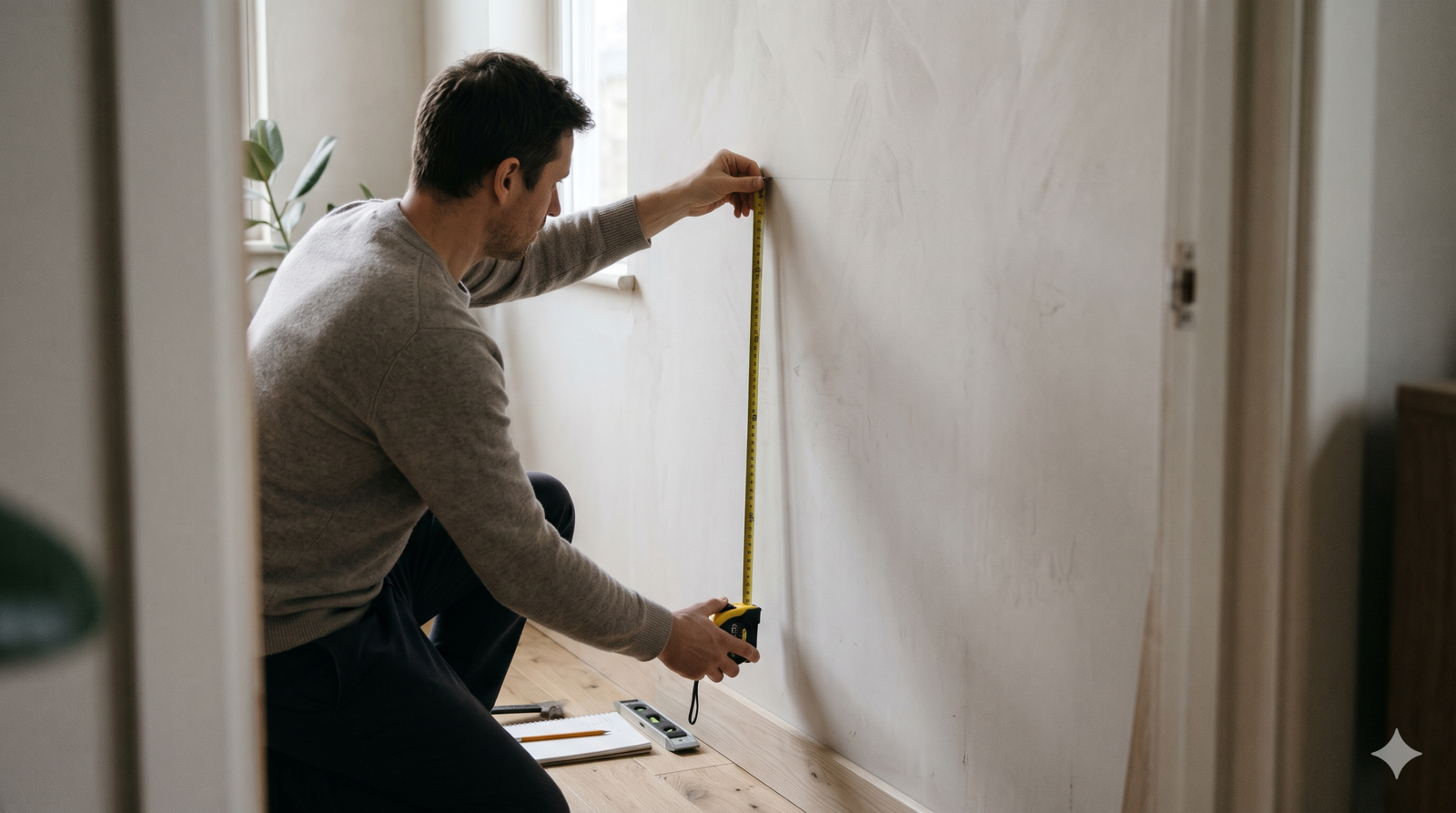
Use these numbers when you plan your layout:
- Height: Keep the top shelf surface 60 to 66 inches from the floor.
- Books: Leave 12 to 16 inches between shelves.
- Decor and small plants: Leave 10 to 12 inches.
- Spice jars and toiletries: Leave 8 to 10 inches.
- Simple rule: Measure your tallest item and add 2 inches.
Which Corner Shelf Material Lasts Longest?
Solid wood such as sheesham, acacia, oak or walnut is the strongest choice for a corner shelf. It does need oiling or waxing to cope with humid weather. Low-cost painted MDF usually lasts only 3 to 5 years and can swell in kitchens and bathrooms.

| Material | Best for | Keep in mind |
|---|---|---|
| Solid wood | Books and heavy displays | Needs regular oiling or waxing |
| Engineered surfaces | Busy living and dining areas | Low care, resists stains and scratches |
| MDF and laminate | Light items in dry rooms | Lasts 3 to 5 years, swells with moisture |
| Tempered glass | Airy looks in small rooms | Best for a light, open display |
| Steel or wrought iron | Industrial styles, damp areas in stainless steel | Pairs well with wood planks |
You will find everything from solid wood shelves on Urban Ladder to budget engineered wood and 3 to 7 tier racks on Flipkart. Prices change often, so compare current listings. Our guide to shopping for home decor online can help.
How Much Weight Can It Hold?
Plan for the loaded weight, not the empty shelf. A solid wood corner shelf filled with books can reach about 9 to 14 kg. The fixing must suit your wall, so check it before you drill:
- Plastic anchors: about 4.5 to 9 kg, suitable for light frames.
- Plasterboard alone: Limit the total to about 7 to 11 kg.
- Toggle bolts in plasterboard: about 11 to 27 kg.
- Concrete walls: Screws should go in by at least one-tenth of the shelf’s width.
Corners in older homes are often slightly out of square, so check the angle first. Level the shelf across both walls, then test the outer edge for flex before you add anything valuable.
Where Can You Use a Corner Shelf at Home?
You can use a corner shelf in almost any room, as long as the material suits the conditions. Living rooms suit display columns, while kitchens and bathrooms need moisture-friendly materials. Here are seven ideas to try.

- Living room: Stack 3 to 5 shelves behind a sofa or beside a window. Zig-zag and tree shapes add interest, and LED lights give a warm glow.
- Bedroom: Fix one at mattress height as a slim nightstand, or beside a dressing table for daily essentials.
- Kitchen: Keep spices, oils and cookbooks within reach. Choose solid wood, stainless steel or engineered surfaces, never painted MDF.
- Bathroom: Use teak with a marine-grade finish, stainless steel or a plastic unit such as the Cipla Plast corner cabinet.
- Home office: Mount it 18 to 24 inches above monitor height for reference books and plants.
- Kids’ room: Fit shelves low, with smooth rounded edges, for toys and books.
- Pooja corner: A floating shelf gives a calm spot for idols, brass diyas and incense.
How Do You Style a Corner Shelf Without the Clutter?
Give each corner shelf one job and only three real objects. Most shelves look great in week one, then slowly fill up with chargers, mail and spare batteries. Deciding that a shelf is only for books, plants or art stops that slide before it starts.

The rule of three makes styling easy:
- Put one tall plant, such as a golden pothos, in the back corner.
- Add a low stack of three to five books, slightly forward and off-centre.
- Finish with one small bowl or candle, and leave clear space around each item.
A small puck light adds soft shadows after dark. Dust weekly with a dry microfibre cloth. Clean solid wood with a slightly damp cloth and a little mild dish soap, then dry it straight away.
Start With One Empty Corner
A corner shelf is one of the simplest ways to make a small room work harder. Pick one empty corner this week, decide its job, measure your tallest item, and then choose a material and fixing that suit the room.
Frequently Asked Questions
What is the best size for a corner shelf?
A corner shelf of 10 to 12 inches per side and 8 to 9 inches deep suits most rooms. It holds books, plants and decor without getting in the way.
Can I put an MDF corner shelf in my kitchen?
It is better not to. Heat and moisture can make MDF swell. Choose solid wood, stainless steel or an engineered surface instead.
How high should I fix a corner shelf?
Keep the top shelf surface 60 to 66 inches from the floor. This keeps it clear of people walking past and of doorframes.