
Good garden wall designs turn a plain boundary into the best-looking part of your home. A well-planned wall gives you privacy, a backdrop for plants and a calmer outdoor space.
Here is how to choose a wall type, pick materials that cope with Indian heat and monsoon rain, and finish the wall with paint, plants and lighting.
Quick answer: Choose garden wall designs by purpose. Low walls, about 45 to 60 cm high, zone the garden and double as seating, while taller boundary walls give privacy and security. Pick breathable materials such as laterite, clay brick or stone, add a jali or green panel for style, and check local rules and an engineer before building tall.
What Are the Best Garden Wall Designs for Indian Homes?
The best garden wall designs match the job the wall must do. Low walls, about 18 to 24 inches (45 to 60 cm) high, mark zones, hold soil and mulch, and keep views open. Boundary or compound walls are taller and focus on privacy and security. Choose the type first, then the material and finish.
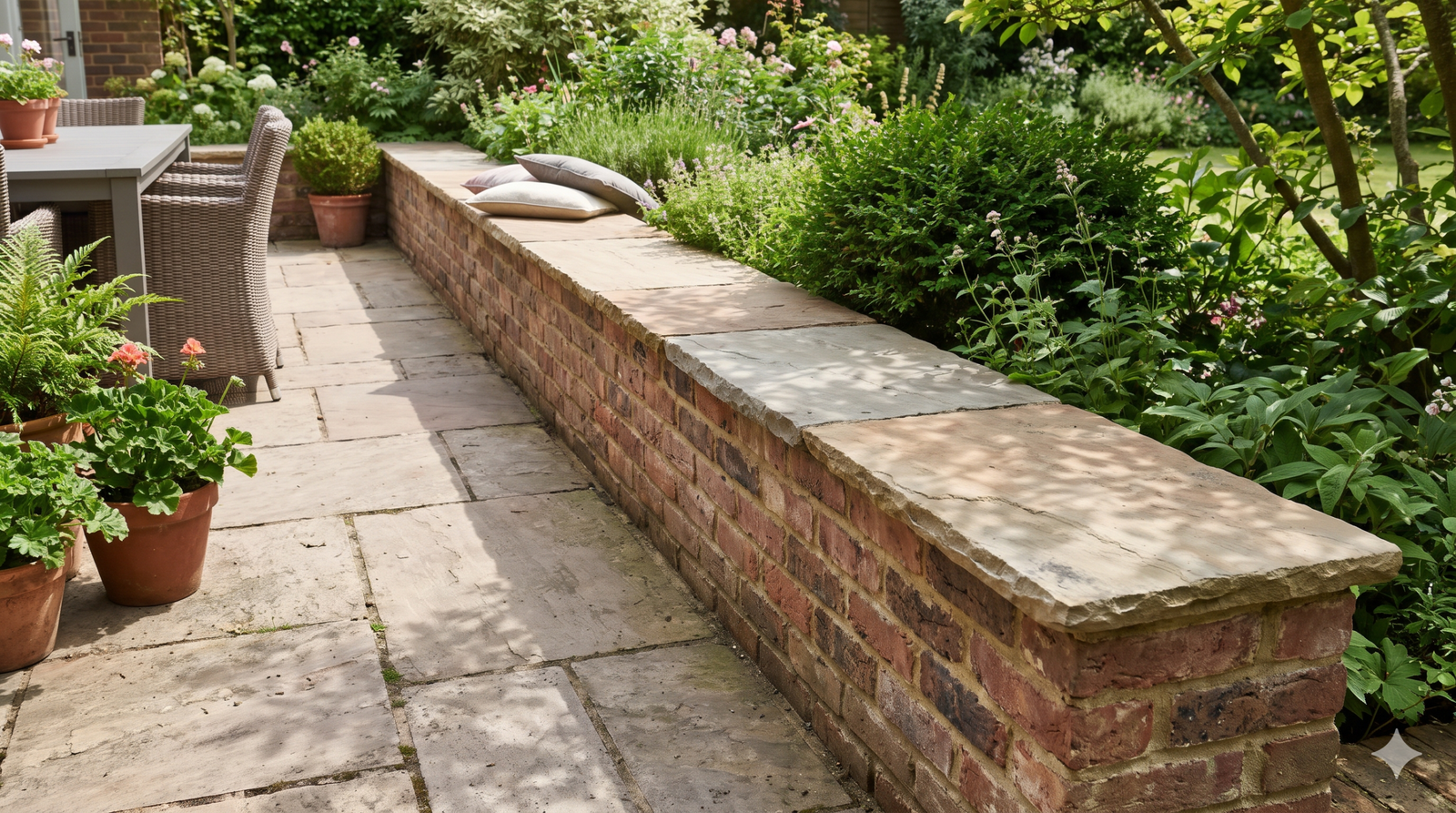
Add flat stone slabs on top of a low brick or stone wall and it becomes built-in seating for a patio or fire pit area. That saves floor space in a compact garden.
Boundary walls need more care. City building bylaws set maximum heights, and these differ between front, side and rear walls and from one city to another. Check your local rules before you build. For any tall or retaining wall, ask a structural engineer, because a wall that fails can injure people.
Some families also follow traditional Vastu guidance, which suggests keeping the south and west walls higher and thicker than the north and east walls, and placing the main gate to the north or east. This is a cultural preference, not a building rule.
Which Garden Wall Material Suits Your Climate?
Local materials often cope best with heat, humidity and monsoon rain. This table compares common choices and how to care for them.

| Material | Why choose it | Care |
|---|---|---|
| Laterite or clay brick with lime mortar | Breathable and rustic, and resists humidity better than manufactured blocks | Apply a clear matte masonry sealer every two to three years |
| Natural stone cladding (sandstone, granite, slate, limestone) | Weather resistant, and will not crack, fade or peel like paint or plaster | Wash with water or mild soap twice a year; reseal porous stone every 12 to 18 months |
| GRC jali panels | Let breeze and light through while blocking direct views | Hold fine patterns and resist salty coastal air better than laser-cut metal |
| Gabion (wire cages filled with stone) | Industrial look with good natural drainage | Ask an engineer before using it for tall or load-bearing walls |
Cap the top of a masonry wall with precast concrete or timber coping so rainwater cannot seep down into it. Exposed red brick also pairs well with smooth concrete or powder-coated metal grills for a modern look.
How Do Jali Screens and Stone Cladding Add Style?
Jali panels with geometric or floral cutouts give privacy without a dark, closed-in barrier. In coastal homes, glass-reinforced concrete (GRC) holds intricate patterns without cracking, while laser-cut metal tends to corrode. You can read more about the traditional jali screen.
Natural stone suits full boundary walls, entrance feature walls, balcony partitions and pillars. Sandstone gives a warm, earthy look. Granite is very strong, and slate has a layered texture that handles rain well. Limestone is soft-toned, while travertine and quartzite give a high-end finish.
For depth, mix smooth and rough stone textures, or choose carved panels inspired by Indian heritage. Sharp geometric patterns suit a more modern house.
Can a Vertical Garden Wall Work in India?
Yes, with the right frame and plants. A vertical garden mounts modular cells on a wall, and each cell holds a soilless medium such as coconut coir. Galvanised steel frames last better than timber in tropical humidity, because wood tends to warp within a couple of years.
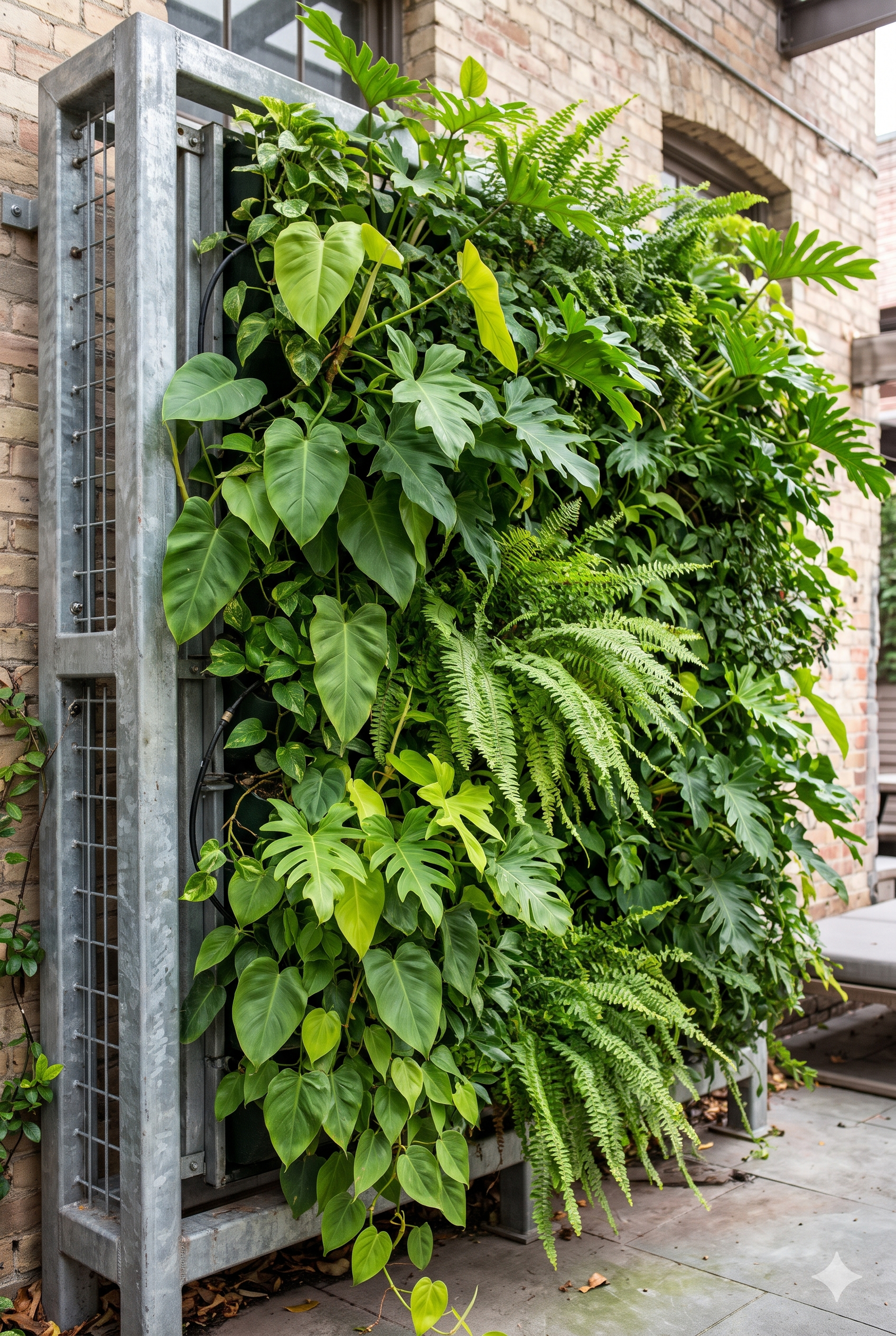
Shallow-rooted tropical plants do best, including philodendron, peperomia, ferns and bromeliads. Add a drip line with a timer so watering needs no daily effort. Then follow a simple care routine:
- Check drip emitters for clogs every month.
- Trim foliage every 6 to 8 weeks.
- Inspect the roots after heavy monsoon rain.
- Replace weak plant cells without disturbing the whole panel.
In deep shade where real plants struggle, a synthetic turf panel gives year-round green. Fix it to marine-grade plywood or a cement backing board with stainless steel fixings. For plant ideas beyond the wall, see our guide to a low maintenance garden and our outdoor flowers guide.
What Paint, Lighting and Design Rules Make a Wall Stand Out?
Use breathable exterior masonry paint, which resists UV and weather and lets trapped moisture escape from brick. Before painting, scrub off algae and moss with a fungicidal wash, repair cracks and apply a primer, then roll on two coats.
Dark shades such as charcoal, navy or deep green make a small yard feel larger because the wall fades behind green plants. Sage, olive and off-white feel calm. Test a sample on the wall first, since strong sun makes colors look lighter outdoors.
These design rules keep the result looking planned:
- Choose one main wall material.
- Limit the palette to three colors.
- Keep the top edge straight for a crisp finish.
- Add relief panels or vertical slat screens for texture.
- Plan the wiring before plastering so lights stay hidden.
Warm white LED strips along the coping, or small wall lights, make stone, brick and leaves glow after dark. For decor, match anchors to the wall: masonry plugs for brick, and wall plugs for plastered walls. Choose outdoor-safe items such as terracotta pots, powder-coated metal and teak, and avoid untreated iron, which rusts quickly.
Plan Your Wall, Then Build It Well
Decide first whether you need a low zoning wall or a tall boundary wall. Check your local bylaws, ask an engineer for anything tall, then choose a breathable material and one standout idea, such as a jali, stone or a green panel. Sketch your plan this week, and your garden wall designs will turn the boundary into a feature.
Frequently Asked Questions
Can I build a garden wall to any height?
No. City bylaws limit boundary wall heights, and the limits differ for front, side and rear walls. Check with your local authority before you build, and ask an engineer for tall walls.
Which garden wall material is best for the monsoon?
Breathable materials such as laterite, clay brick with lime mortar and natural stone cope well. Cap the top so rain cannot seep in, and reseal brick every two to three years.
Do vertical garden walls need a lot of care?
They need regular checks: drip emitters monthly, trimming every 6 to 8 weeks, and a root check after heavy monsoon rain.