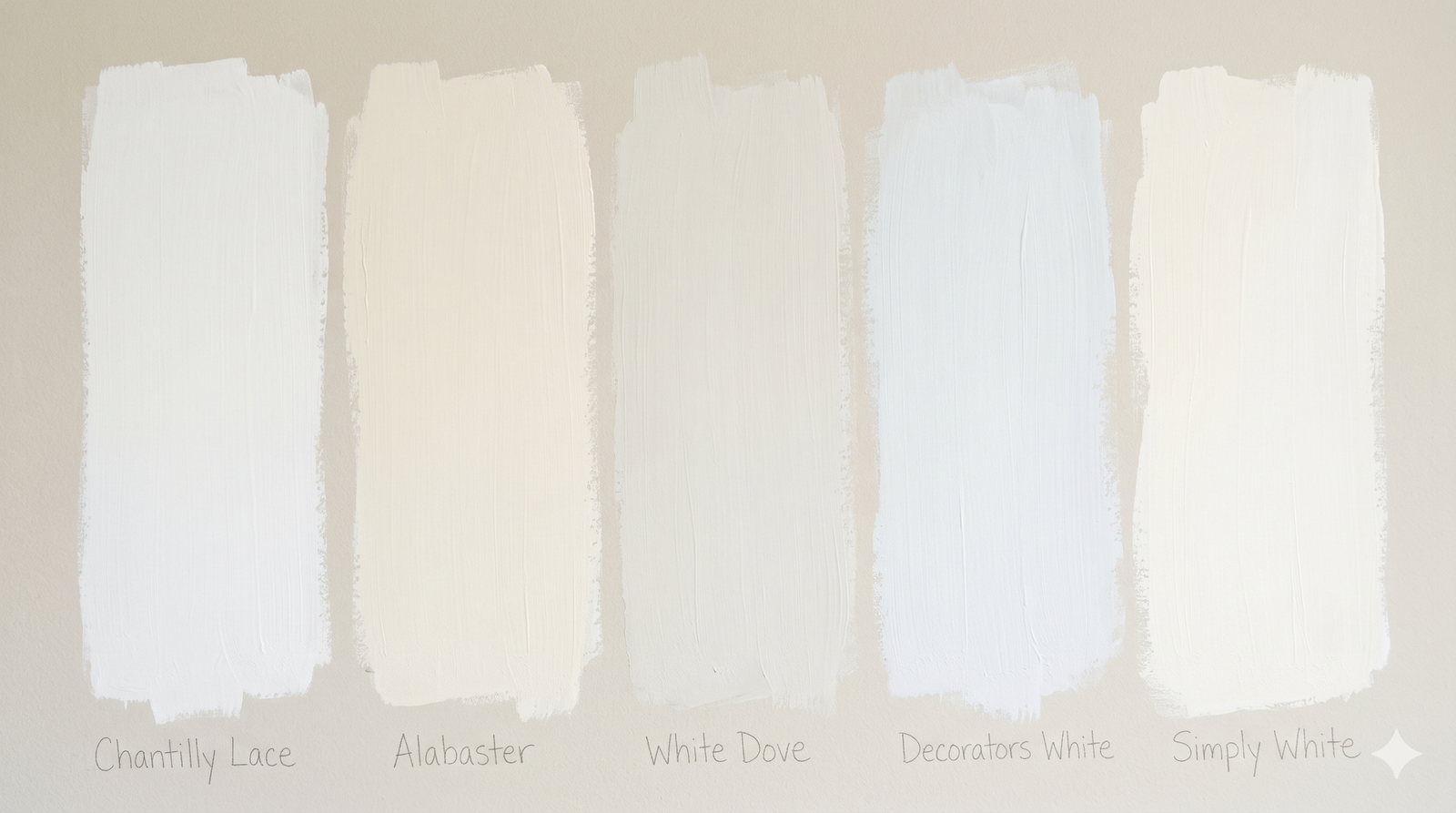
Finding the best white paint for walls sounds easy, yet white is one of the hardest colors to get right. A shade that looks crisp on a small chip can turn cold, yellow or dingy once it covers a whole room.
This guide explains undertones, light and sheen, then lists reliable designer picks from Benjamin Moore and Sherwin-Williams and shows how to test them.
Quick answer: There is no single best white paint for walls. Match the undertone to your light: warm whites such as Alabaster or Swiss Coffee suit north-facing rooms, while neutral or cooler whites such as Pure White or Chantilly Lace suit bright south-facing rooms. Test large samples for several days before you buy.
What Is the Best White Paint for Walls?
The best white paint for walls is the one whose undertone suits your light and your finishes. Almost every white contains a hint of yellow, pink, green, blue or gray. Warm whites feel cozy, and cool whites feel crisp. Your room decides which one works.

True neutral whites contain very little added pigment and reflect light like a gallery wall. Most store-bought whites lean one way or another. Yellow or red pigments make a white warmer, while blue, green or purple make it cooler. A touch of gray calms an overly buttery white.
Temperature changes how a room feels. Warm whites suit farmhouse styles, wood tones and brass. Cool whites suit modern kitchens and bathrooms with chrome or marble. A cool white in a dark room can turn icy, and a very warm white in a sunny room can look heavy.
Which White Paints Do Designers Pick?
These whites come up again and again. Always confirm the code on the paint chip before you buy.
| Color | Code | Character |
|---|---|---|
| Benjamin Moore White Dove | OC-17 | Clean, classic and the brand’s most popular white |
| Benjamin Moore Simply White | OC-117 | Bright, leans warmer in tone |
| Benjamin Moore Chantilly Lace | OC-65 | Cooler, the brand’s most neutral white |
| Benjamin Moore Swiss Coffee | OC-45 | Warm and creamy, nice for bedrooms and living rooms |
| Sherwin-Williams Alabaster | SW 7008 | Warm and soft; can look dingy in dim north-facing rooms |
| Sherwin-Williams Pure White | SW 7005 | Soft, clean and balanced; a versatile all-purpose white |
| Sherwin-Williams Greek Villa | SW 7551 | Soft, creamy white that feels inviting |
| Sherwin-Williams Shoji White | SW 7042 | Warm and creamy, bordering on greige |
Other favorites include Benjamin Moore Decorator’s White (OC-149), a crisp and cooler white, and Pale Oak (OC-20), a soft greige that can read off-white in bright light. Sherwin-Williams Snowbound (SW 7004) is a cooler grayed white, and Creamy (SW 7012) is a warm yellow-white.
How Does Room Direction Change White Paint?
Natural light changes how undertones read on your walls. Use this simple guide:
- North-facing rooms: cool, shadowy light makes whites look gray, so choose warm whites with soft yellow or cream undertones.
- South-facing rooms: strong golden light amplifies yellow, so neutral or slightly cool whites keep the room breezy.
- East-facing rooms: warm morning light turns cooler by afternoon, so a slightly warm white works well.
- West-facing rooms: light shifts from cool shade to golden sun late in the day, so test at several times.
Trees outside can also bounce a green tinge onto your walls. If you want more ways to make a room feel finished, see our guide to rooms ideas that look expensive.
How Do Lighting and Sheen Change White?
Lightbulbs alter white paint at night. Some LED bulbs cast a harsh blue hue, so choose warm bulbs rated between 2700K and 3000K on the Kelvin scale to keep white walls cozy.
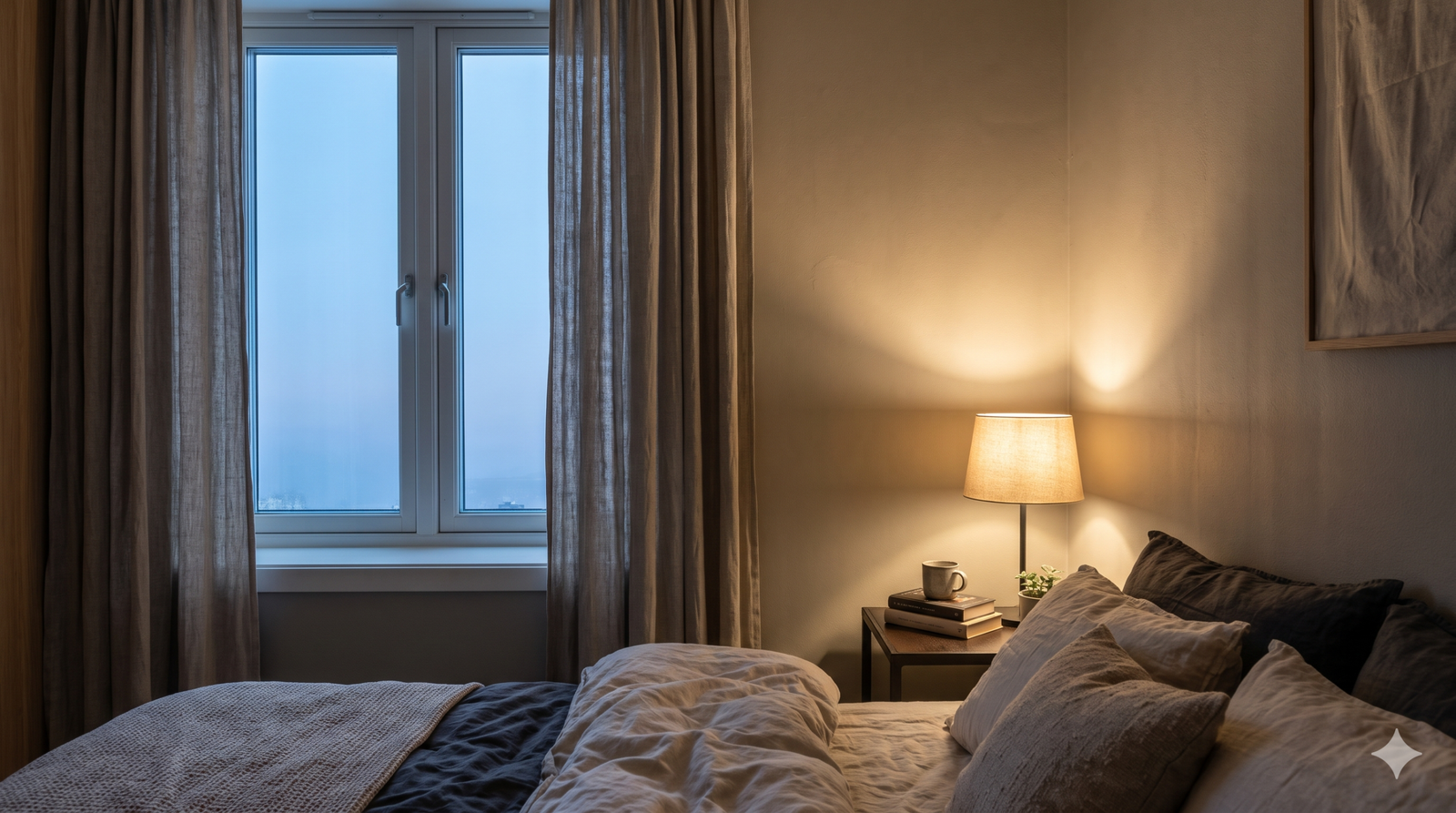
Light Reflectance Value, or LRV, measures how much light a color reflects on a scale from 0 to 100. High-LRV whites brighten dark hallways and small rooms. Lower-LRV off-whites have more depth and feel richer and cozier.
Sheen matters as much as color:
- Flat or matte: hides wall flaws, ideal for ceilings and low-traffic rooms.
- Eggshell or satin: a soft glow that wipes clean, best for living rooms and hallways.
- Semi-gloss or gloss: durable and reflective, best for trim, doors and cabinets.
Painting walls, trim and ceiling the same white, called color drenching, removes harsh lines and makes a room feel bigger. For ceilings, a soft off-white often looks better than a stark bright white, which draws attention upward. Our home decor ideas for 2026 cover more finishing touches.
How Do You Test White Paint Before Buying?
Never choose from a store chip alone, because fluorescent lights hide the true undertone. Use these steps:

- Order large peel-and-stick samples, or paint 2 by 2 foot patches on several walls.
- Test three or four whites side by side to reveal their undertones.
- Leave the samples up for several days.
- Check them in morning light, midday sun, late afternoon shade and under evening lamps.
- Compare them with your floors, wood, stone and metals.
If your room is full of warm finishes, such as honey oak and tan leather, a slightly cooler white restores balance. If it has cool gray tile and stainless steel, a warmer off-white keeps it from feeling clinical.
Choose Your White With Confidence
Pick two or three whites that fit your light, buy samples this week and watch them for a few days. The best white paint for walls will be the one that still looks good at every hour. Then pick a sheen that suits the room, and you are ready to paint.
Frequently Asked Questions
What is the safest white paint for walls?
Many designers reach for Benjamin Moore White Dove (OC-17) or Sherwin-Williams Pure White (SW 7005), since both read soft and clean. Still, test a sample in your own light first.
Why does white paint look yellow or gray on my walls?
Most whites contain undertones, and room direction and bulb color shift them. Warm bulbs and south-facing sun can emphasize yellow, while cool north light can make white look gray.
What sheen should I use for white walls?
Use flat or matte for ceilings and low-traffic rooms, and eggshell or satin for living rooms and hallways. Save semi-gloss for trim, doors and cabinets.