
The best containers for pantry storage keep food fresh, keep pests out and make it easy to see what you have. Mismatched bags and half-open boxes do the opposite.
Here is how to choose pantry containers by material, shape and seal, and how to set them up so the pantry stays tidy.
Quick answer: The best containers for pantry storage are airtight, stackable and clear. Glass suits long-term staples, while sturdy BPA-free plastic is lighter for everyday use. Choose square or rectangular shapes to save space, size them to your bulk bags, and label each lid.
What Makes the Best Containers for Pantry Storage?
Three features matter most: a tight seal, a shape that stacks and a size that matches what you buy. A lid that clicks shut with a gasket slows air and moisture, which helps flour, sugar and cereal stay fresh longer.
Be careful with the word “airtight.” Some containers are only leak-resistant, which is fine for dry snacks but weaker for flour or crackers. Look for a gasket and locking clips when freshness matters.
Clear sides help too. When you can see the level, you buy before you run out, and you stop buying duplicates.
Use this quick checklist when you shop:
- A gasket and a locking or clip-down lid.
- Clear sides so you can see the level.
- A wide mouth that fits a measuring cup.
- A shape that stacks safely.
Glass, Plastic or Metal: Which Material Works Best?
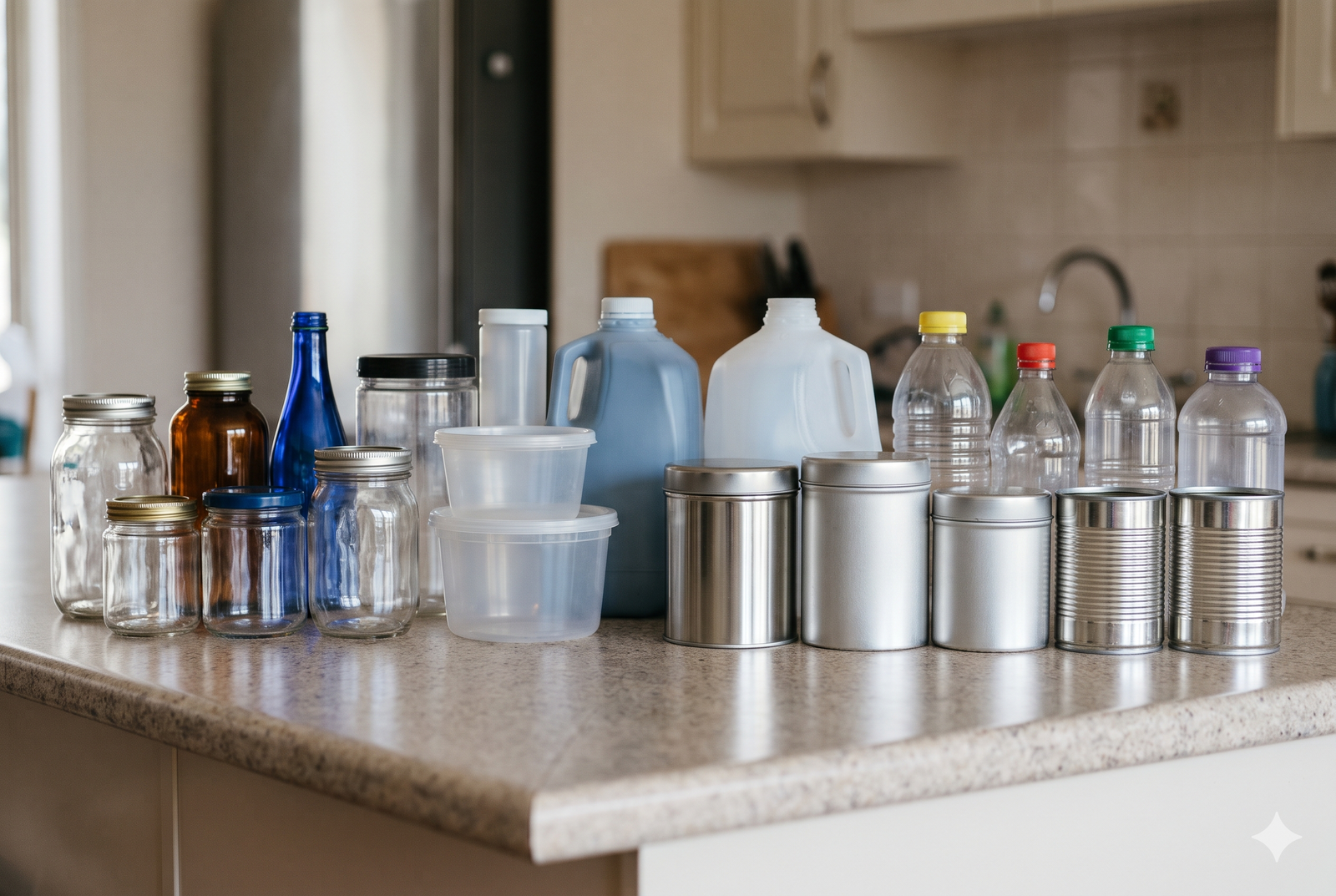
Each material has a job. Glass does not hold odors or stains and is easy to clean, but it is heavy and can break. Plastic is light and cheap, so it suits kids’ snacks and top shelves. Metal tins block light, which is good for coffee and tea.
| Material | Best for | Watch out for |
|---|---|---|
| Glass | Flour, sugar, rice, pasta | Weight and breakage |
| Plastic | Cereal, snacks, high shelves | Stains and scratches over time |
| Metal | Coffee, tea, baking supplies | Cannot see contents |
Check the maker’s label before you wash plastic in a dishwasher or microwave it, since heat limits differ by product.
Should You Pick Square or Round Containers?
Square and rectangular containers waste less space. Round jars leave gaps between them, while square ones sit flush and stack neatly. Use round jars where you want a decorative look on an open shelf.

For small pantries, narrow rectangles that fit a shelf depth work best. If your shelves are tight, our guide to simple ways to declutter your home can help you clear the space first.
How Do You Choose the Right Size?
Measure before you buy. Pour your usual bag of flour or sugar into a measuring cup to see how much space it needs, then pick a container a little bigger. Remember that 16 cups equals 4 quarts, so a 4-quart container holds about 16 cups.

Use this simple sizing plan:
- Large containers for flour, sugar and rice.
- Medium containers for pasta, oats and cereal.
- Small containers for spices, nuts and baking extras.
- Pull-out bins for snack packets and loose pouches.
Buy a few first, test them for a month and add more once you know what you really use.
Group like with like. Keep baking staples together, breakfast foods together and snacks together, so each zone has its own family of containers. Matching lids from one set also stack better and save you the lid hunt.
How Do You Keep Pantry Moths Out?
The Indian meal moth is the most common pantry pest, and it often arrives inside store-bought packages. Airtight containers make it hard for it to spread, but they do not remove eggs already in the food.
If you are unsure about a bag of flour or grain, seal it and freeze it at 0 degrees Fahrenheit for at least 4 days, which Purdue and University of Florida guidance recommends. Utah State advises 4 to 7 days and warns against heating fine flour in an oven because of fire risk.
After freezing, move the food into clean containers and wipe the shelf first. Throw out anything clearly infested.
Pheromone traps catch only male moths, so use them to monitor the problem rather than as the whole fix. Moths are most active from late spring through early fall, when warm, humid air speeds up breeding, so check your flour and grains more often then.
Keep It Working: Daily Habits
Good containers only work with good habits. Put new items behind old ones so the oldest food gets used first. Label every lid with the contents and the date you opened it.
When a container runs low, wash it and let it dry fully before you refill it. Do not top up old food with a new bag, because leftovers at the bottom can carry pests or stale flavors into fresh stock.
Wash gaskets and lids often, and let them dry fully before sealing. A damp seal can trap moisture and smell. Our tips on how to stop clutter creep also work well for pantry shelves.
Set Up Your Pantry in One Afternoon
Empty one shelf, wipe it down, sort food into zones such as baking, breakfast and snacks, and then fill matching containers. Start with flour, sugar and cereal. Once the first shelf looks good, repeat. The best containers for pantry storage will pay you back every time you cook.
Frequently Asked Questions
What are the best containers for pantry storage?
Airtight, stackable containers with a gasket seal are the best. Glass works well for long-term staples like flour and rice, and sturdy plastic is a lighter choice for everyday snacks and cereal.
How do I keep pantry moths out of my containers?
Store dry goods in airtight containers, clean the shelves and freeze suspect flour or grains at 0 degrees Fahrenheit for at least 4 days before storing. Discard anything clearly infested.
Are square or round pantry containers better?
Square or rectangular containers are better for saving space because they stack flush with no gaps. Round jars look nice on open shelves but waste room in a crowded pantry.