
An air fryer does not really fry. It is a small, fast convection oven that blows very hot air around your food. Most disappointing results come from a handful of simple mistakes, and all of them are easy to fix.
This guide is for cooks in the US and India. It covers how the appliance works, the mistakes to avoid, safe temperatures, Indian snack tips and an easy cleaning routine.
Quick answer: Cook in a single layer and never fill the basket past the max line, ideally only half full. When converting an oven recipe, lower the temperature by about 25°F (10 to 15°C) and start checking at 75 to 80 percent of the time. Use a thermometer for meat, and skip aerosol sprays and loose liners.
How Does an Air Fryer Differ From an Oven?
An air fryer circulates hot air quickly inside a compact chamber. That airflow strips moisture from the surface of food, so it browns early and turns crisp. A normal oven has a much larger cavity and gentler air movement.
This is why the same temperature gives different results in each. Small, thin or breaded foods such as cut potatoes, wings and nuggets love the fast airflow. Large roasts, thick cuts and dense casseroles often do better in an oven, where the interior has time to cook without the outside burning.
What Are the Most Common Air Fryer Mistakes?
- Overcrowding: piled-up food blocks the airflow, so the middle steams instead of crisping. Cook in a single layer and work in batches.
- Wet batters: beer batter and tempura drip through the basket before they set. Use a dry or set coating such as flour, egg and breadcrumbs.
- Very watery vegetables: celery, zucchini, tomatoes and similar vegetables release steam and turn mushy.
- Loose liners: light paper or foil can be pulled up into the heating element during preheating and catch fire. Only use a liner when food weighs it down, and never use wax paper.
- Foil with acidic food: lemon, vinegar and tomato can react with aluminium, so skip foil for those.
- Aerosol cooking spray: it can leave a sticky residue that damages the non-stick coating. Use a pump bottle or brush instead.
Light foods can also fly around. Bread slices and loose cheese may blow into the element, so pin them down with a toothpick or a small rack.

What Internal Temperatures Keep Air Fryer Food Safe?
Colour is not a safe guide to doneness, so use an instant-read thermometer in the thickest part of the food, away from bone. These are the US Department of Agriculture’s minimums, and they apply in any kitchen.

| Food | Safe internal temperature | Note |
|---|---|---|
| Chicken, turkey and other poultry | 165°F (74°C) | Applies to ground poultry too |
| Leftovers and casseroles | 165°F (74°C) | Reheat all the way through |
| Ground beef, pork, lamb | 160°F (71°C) | No rest time needed |
| Beef, pork, lamb steaks and chops | 145°F (63°C) | Rest 3 minutes |
| Fish | 145°F (63°C) | Check the thickest part |
Starchy foods need care too. Acrylamide can form when starchy foods such as potatoes and bread are cooked above about 120°C (248°F). Food safety agencies advise cooking them to a golden yellow rather than dark brown.
Which Habits Help You Get Better Results?
Preheat for three to five minutes before cooking fries, nuggets and other crisp foods. Halfway through, shake the basket or flip larger pieces with silicone-tipped tongs so they brown evenly.
A few cheap tools help. An oil mister lets you coat food lightly. Silicone tongs protect the coating, and a trivet lets you stack a second layer when space allows. Small ramekins are handy for eggs and single-serve desserts. Cooking in smaller batches also helps, because every piece then sits in the moving air.
If you are choosing between appliances, our guide to an air cooker buying guide explains capacity and wattage, and the frying pan use guide helps when a pan is the better tool.
How Do You Use It for Indian Snacks? (India)
Indian kitchens can use an air fryer to cook favourite snacks with far less oil than deep frying in a kadhai. Paneer tikka, tandoori chicken, samosas, aloo tikki, kebabs and sabudana vada all crisp well.
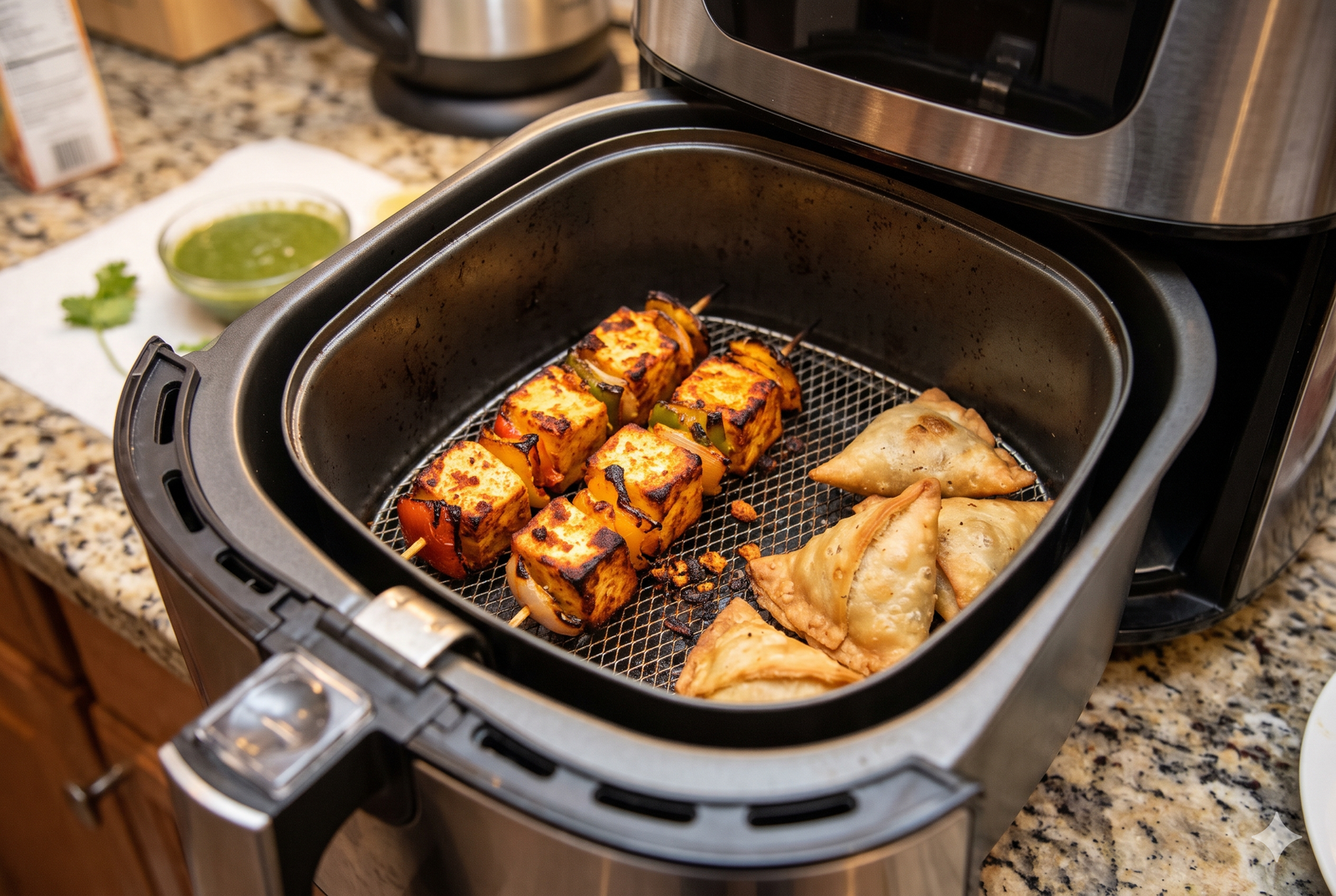
Pakoras and vadas made with a loose batter are the exception, because the batter drips through the basket. Make the batter into a thick paste, or lightly oil the basket first. Check early and turn the pieces once so they colour evenly. Pat paneer and chicken dry after marinating, so the surface can crisp instead of steaming.
How Do You Clean Your Fryer After Oily, Spicy Food?
Let the unit cool for 10 to 15 minutes, then remove the basket and drip tray. Tip out crumbs and fat, and soak the parts in warm, soapy water for 5 to 10 minutes. A soft sponge works well, and an old soft toothbrush clears the mesh gaps.
For turmeric stains and baked-on grease, spread a paste of baking soda and water over the area for 15 to 20 minutes, then wipe it off. To freshen the chamber, put lemon slices in a heat-safe bowl of water and run it at 150°C for three to five minutes. Never use steel wool, metal scrubbers or bleach, because they scratch the non-stick coating.
Clean the drip tray after every use. Old fat can smoke heavily and may become a fire risk.
Treat the appliance as a fast mini oven, give food space, check temperatures with a thermometer and keep it clean. Try one change this week, such as cooking in two smaller batches, and notice how much crisper dinner turns out.
Frequently Asked Questions
Do I need to preheat an air fryer?
A cold start is fine for simple reheating, but preheating for three to five minutes gives faster cooking and a crisper outside for fries, nuggets and pastries.
Can I use aluminium foil in an air fryer?
Yes, if food weighs it down and it stays clear of the heating element, but check your manual first. Skip foil with acidic foods like tomato, lemon and vinegar, and never use wax paper.
Why is my air fryer food soggy instead of crisp?
The usual cause is overcrowding. Piled food blocks airflow and steams. Cook in a single layer, avoid wet batters and high-water vegetables, and shake or flip halfway through.