
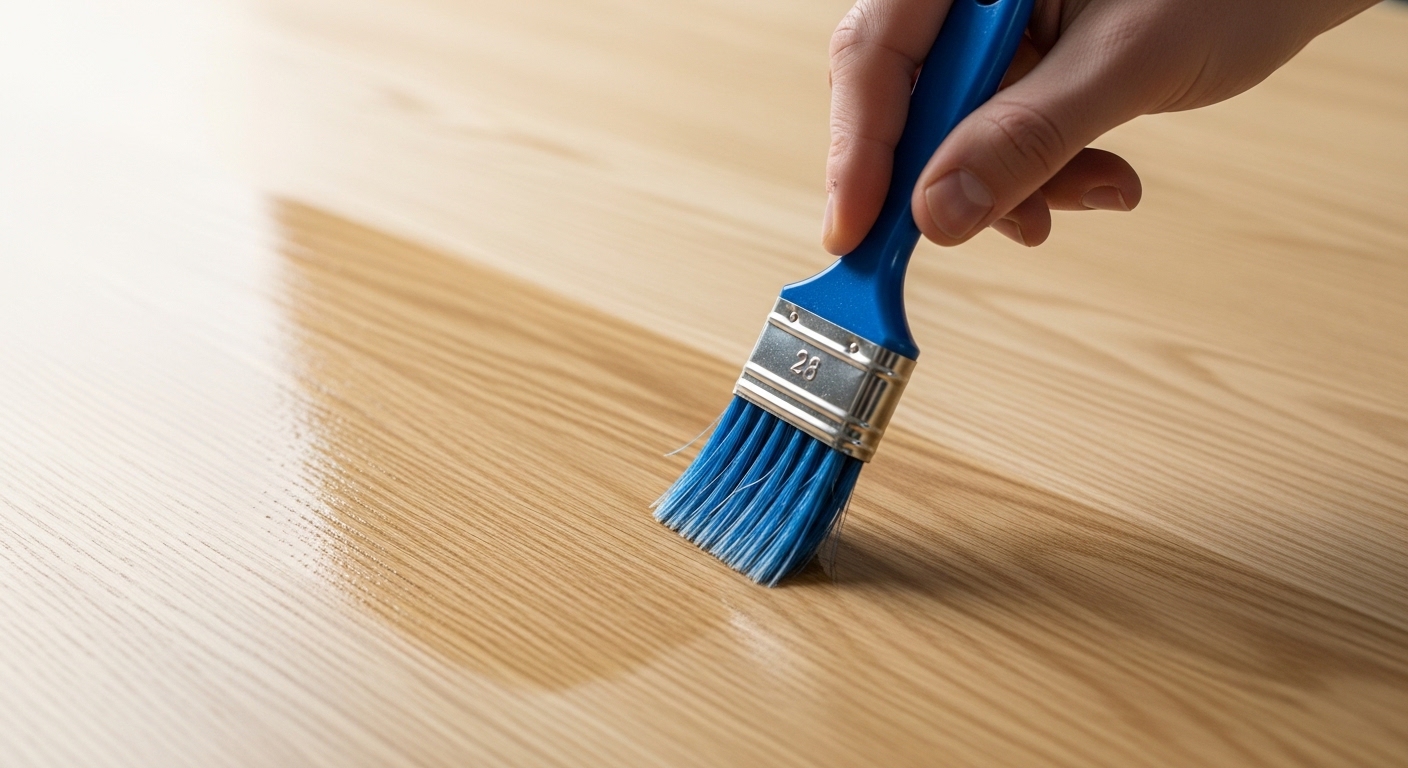
Remember the old days of refinishing furniture? You’d apply a coat of oil-based sealer, and then you’d have to evacuate your house for three days because the fumes were strong enough to peel paint off the walls. Then, you’d wait twelve hours for a single coat to dry, only to find your beautiful “White Oak” table had turned a sickly shade of amber yellow.
Those days are over.
Enter water based polyurethane. It has quickly become the darling of the home renovation world, and for good reason. It’s fast, it’s clear, and it won’t make you lightheaded. But is it as durable as the old stuff? Can you use it on floors?
Whether you’re a weekend warrior tackling a coffee table or a homeowner eyeing a floor renovation, this guide is your roadmap to a professional, long-lasting finish.
Table of Contents
What Exactly is Water Based Polyurethane?
At its core, water based polyurethane is a plastic resin (polyurethane) suspended in water. When you brush or spray it onto wood, the water evaporates, leaving behind a hard, protective film.
In the past, water-based versions were criticized for being “thin” or “weak.” However, chemical engineering has come a long way. Modern formulas—especially the “high-traffic” or “commercial grade” versions—are now nearly as tough as their oil-based cousins.
The Major Perks:
- Crystal Clear Clarity: Unlike oil-based poly, which adds an “amber glow,” water-based poly stays clear. This is essential if you want to keep the natural look of light woods like Maple, Ash, or White Oak.
- Lightning Fast Dry Times: You can often re-coat in just 2 hours. You can finish an entire project in a single day.
- Low VOCs and Low Odor: VOCs (Volatile Organic Compounds) are the “stinky” chemicals that are bad for your lungs and the environment. Water-based poly has significantly fewer of them.
- Easy Cleanup: Forget mineral spirits or paint thinner. You can clean your brushes with simple soap and warm water.
Water Based vs. Oil Based Polyurethane: The Great Debate
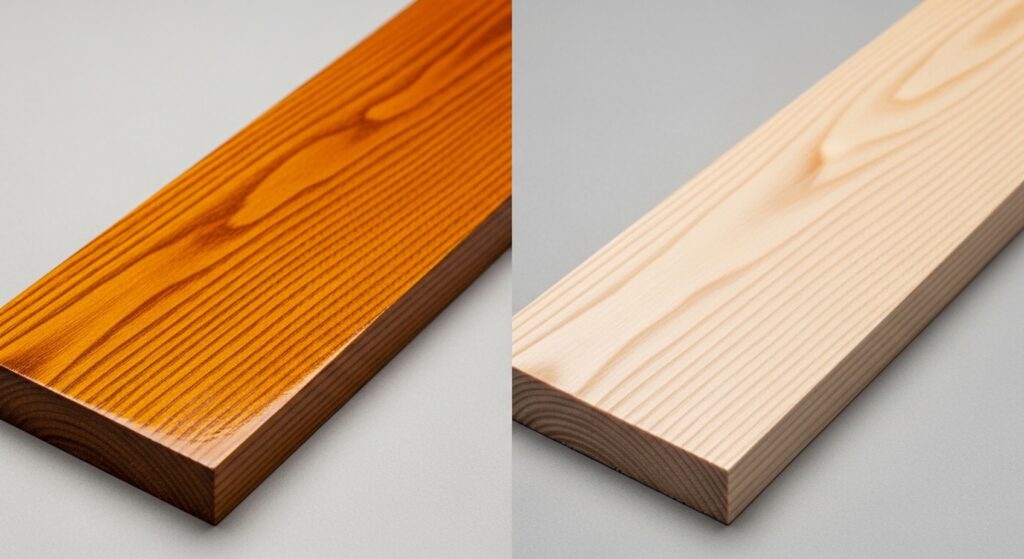
If you’re standing in the paint aisle at the hardware store, you’re likely staring at two cans. Here is the quick breakdown to help you choose.
| Feature | Water Based Poly | Oil Based Poly |
| Color | Stays Clear | Turns Amber/Yellow |
| Dry Time | 1–3 Hours | 8–24 Hours |
| Odor | Very Low | Very Strong |
| Durability | High (Great for most uses) | Very High (Best for heavy abuse) |
| Cleanup | Soap and Water | Mineral Spirits |
The Verdict: If you are finishing a dark wood like Walnut and want a warm, traditional look, go with oil. If you are finishing anything light-colored, painted white, or if you are working in a space without industrial ventilation, water based polyurethane is the winner every time.
How to Apply Water Based Polyurethane Like a Pro
The secret to a “factory-finish” isn’t in the brush; it’s in the preparation. Because water-based poly is thinner than oil, it will highlight every single scratch or dust mote you leave behind.
Step 1: The Sanding Sequence
Start with 120-grit sandpaper and work your way up to 220-grit. Always sand in the direction of the wood grain. Once finished, use a vacuum with a brush attachment and follow up with a damp (not soaking) microfiber cloth to remove every speck of dust.
Step 2: “Raise the Grain” (Pro Tip)
Water-based finishes have one quirk: they make wood fibers swell and stand up, leaving a “fuzzy” feel. To prevent this, wipe the bare wood with a damp cloth and let it dry. Sand it lightly one last time with 220-grit to knock down those raised fibers before you apply the poly.
Step 3: The Application
Use a high-quality synthetic bristle brush or a foam applicator. Natural bristle brushes are designed for oil and will soak up water, becoming limp and useless.
- Apply in long, even strokes.
- Do not over-brush. Water-based poly dries quickly; if you keep brushing as it sets, you’ll create permanent ridges and bubbles.
- Maintain a “wet edge” to avoid lap marks.
Step 4: Sanding Between Coats
After the first coat is dry (usually 2 hours), lightly sand the surface with 320-grit sandpaper. This creates “teeth” for the next coat to bond to. Clean the dust and repeat. For furniture, 3 coats is the “sweet spot.” For floors, aim for 4 or 5.
5 Common Mistakes That Ruin Your Wood Finish
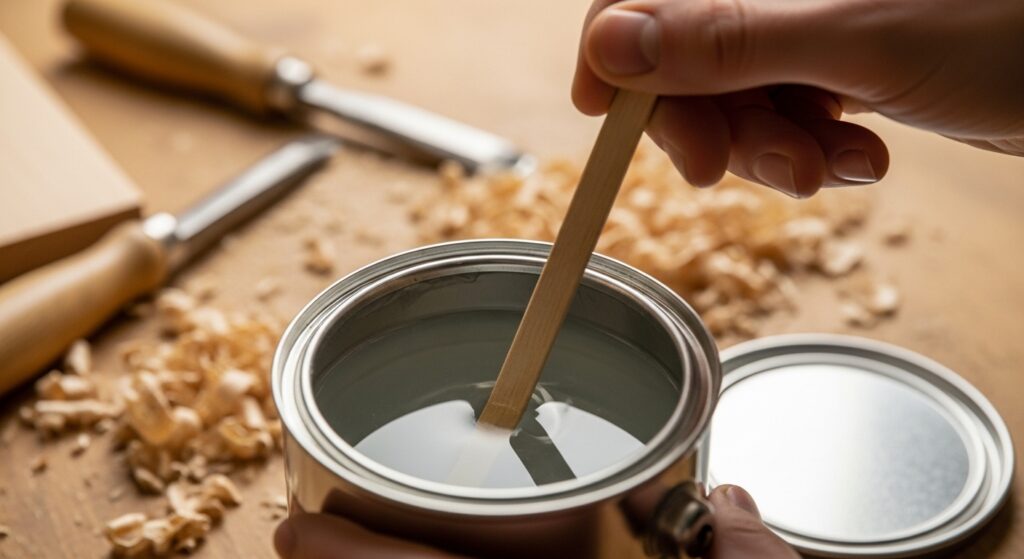
- Shaking the Can: Never shake polyurethane! This introduces thousands of tiny air bubbles that will end up trapped in your finish. Always stir gently with a wooden stick.
- Using a Natural Bristle Brush: As mentioned, these are for oil. Use synthetic.
- Working in a Drafty Room: While you need ventilation, a strong breeze or a fan pointed directly at the wet wood will make it dry too fast, causing cracks or “orange peel” texture.
- Applying Too Thick: Thin coats are your friend. Thick coats will sag, drip, and take forever to cure.
- Ignoring the Weather: High humidity can turn water-based poly cloudy. Try to work on a day when the humidity is below 60%.
Is It Durable Enough for Floors?
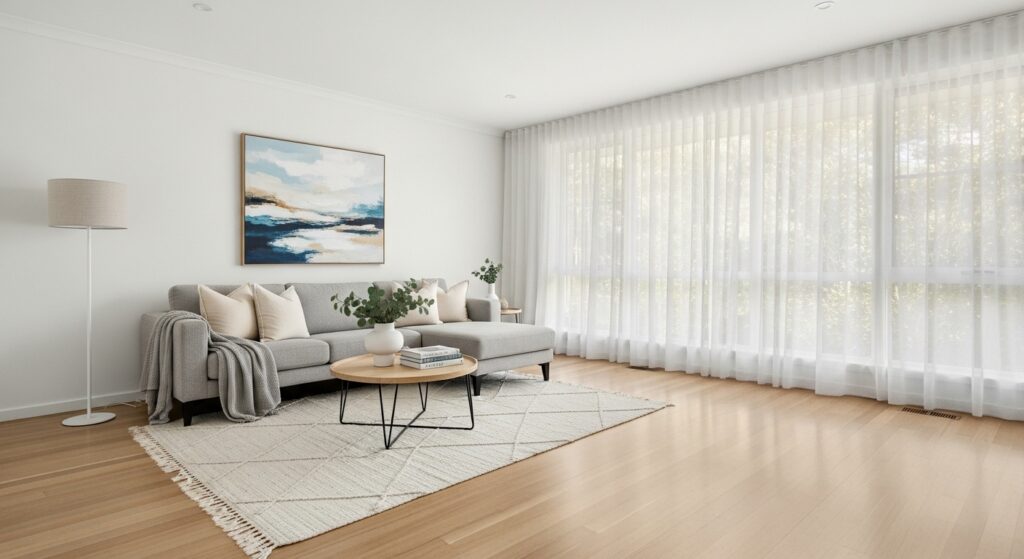
This is the number one question homeowners ask. The answer is yes, but with a caveat. You must buy a product specifically labeled for floors. These formulas contain “cross-linkers” or aluminum oxide, which make the finish much harder than standard furniture poly.
In 2026, we are seeing a massive trend toward “Water-Based Hardwood Refinishing” because homeowners want to get back into their houses faster. While an oil-finished floor might last 15 years before needing a screen-and-recoat, a high-quality water-based floor finish will easily give you 10–12 years of beautiful service.
Your Questions, Answered
Q: How many coats of water-based polyurethane should I apply?
For furniture and light-use items, 3 coats are standard. For floors or heavy-use dining tables, 4 to 5 coats are recommended for maximum protection.
Q: Can I apply water-based poly over oil-based stain?
Yes, but the oil-based stain must be completely cured. Usually, this takes 24–72 hours. If the stain is still “off-gassing,” the poly won’t adhere properly.
Q: Does water-based polyurethane turn yellow over time?
No. Unlike oil-based poly, which continues to amber as it ages, water-based formulas remain clear for the life of the finish.
1 thought on “Forget the Smell and the Wait: Why Water Based Polyurethane is a DIY Game Changer”